
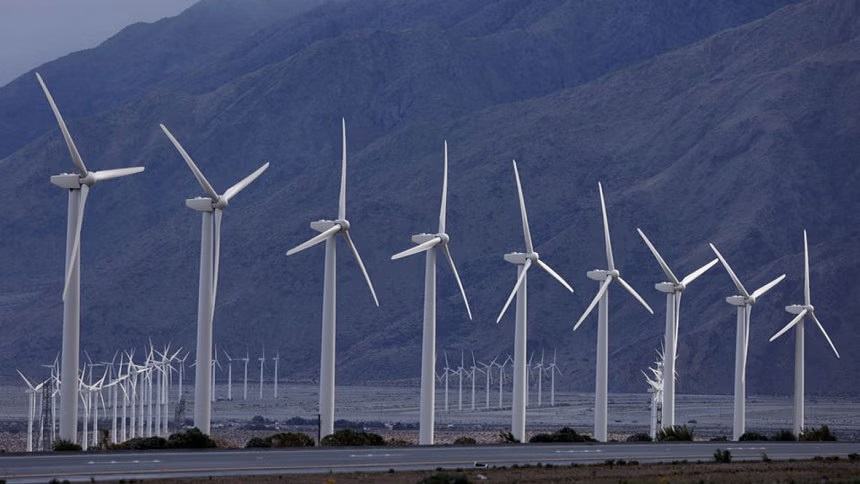
In a recent report, research and consultancy firm Wood Mackenzie has projected that the United States could witness a remarkable threefold increase in its annual renewable energy capacity within the next ten years, reaching an impressive 110 gigawatts (GW) by 2033. This ambitious growth is attributed to the implementation of President Joe Biden's Inflation Reduction Act (IRA), which offers substantial green energy tax credits aimed at encouraging consumers to adopt electric vehicles and incentivizing companies to invest in renewable energy production, ultimately leading to a significant reduction in the nation's carbon emissions.
Chris Seiple, Vice Chairman of Power and Renewables at Wood Mackenzie, highlighted that the IRA has made the renewables sector highly competitive, resulting in an increased demand for development sites and a resurgence in manufacturing activities, further bolstering the industry's expansion.
Wood Mackenzie's research suggests that the IRA's tax credits, while substantial, are estimated to cost approximately $1.9 billion through 2025. However, the potential benefits in terms of reduced carbon emissions are significant, with the law expected to contribute to a 60 percent carbon-free power sector by 2032.
Despite these promising developments, challenges remain, including slower development timelines and the impact of extreme weather conditions on electricity grids. However, technologies like direct line ratings hold the potential to expand grid capacity and mitigate some of these challenges.
In a related analysis, Wood Mackenzie previously emphasized that the U.S. government's targets to increase annual wind power capacity to 80 GW by 2030 would necessitate an investment of $100 billion in securing the supply chain by 2026.
Recent data from the Environmental Protection Agency suggests that as a consequence of the IRA, the United States is on track to achieve a substantial reduction in carbon dioxide emissions, with estimates indicating a reduction of between 35 percent and 43 percent by 2030 compared to 2005 levels. This marks a significant step toward the country's environmental sustainability goals.