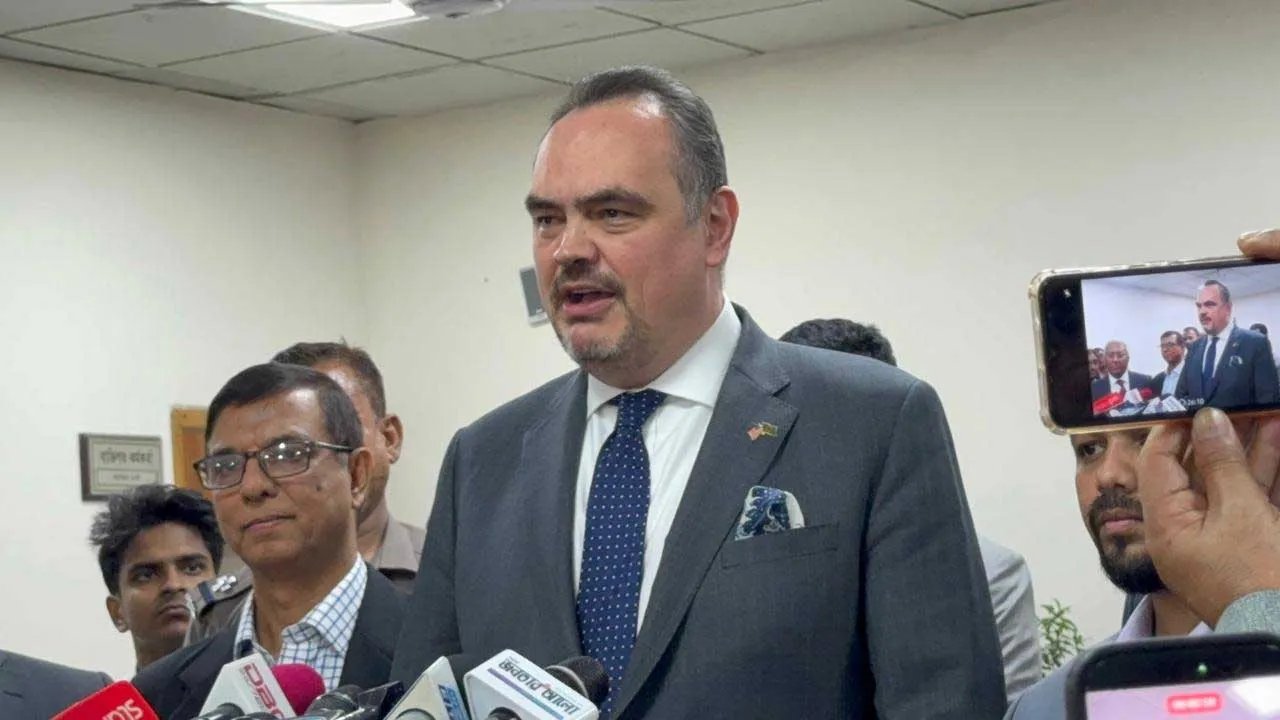


The central bank’s spokesperson Arif Hossain Khan confirmed the information to the media on Thursday (October 23). He said the figure marks a sharp rise from the $1.791 billion received during the same period last year — reflecting a notable year-on-year growth in remittance inflow.
Central bank officials said that the country’s foreign exchange reserves have seen improvement due to the consistent flow of expatriate income through formal banking channels. They attributed this upward trend to government initiatives to curb hundi transactions, cash incentives, and enhanced banking facilities for remittance senders.
From July 1 to October 22 of the current fiscal year, total remittances stood at $9.507 billion, compared to $8.334 billion in the same period last year — an increase of 14.10 percent.
The monthly remittance flow for the 2024-25 fiscal year was as follows: $1,913.7 million in July, $2,221.3 million in August, $2,404.1 million in September, $2,395 million in October, $2,200.0 million in November, and $2,640.0 million in December. In addition, $2,190.0 million in January, $2,530.0 million in February, $3,290.0 million in March, $2,750.0 million in April, $2,970.0 million in May, $2,820.0 million in June, $2,478.0 million in July, $2,422.0 million in August, and $2,685.8 million in September.
Economists say this consistent rise in remittance flow underscores the resilience of Bangladesh’s overseas workforce and their critical contribution to the national economy.