
The new Customs Act-2023 recognizes daily exchange rates of foreign currencies, or floating rates, ensuring transparency in customs assessments and transactions.
A floating exchange rate is a regime where the currency price of a nation is set by the forex market based on supply and demand relative to other currencies.
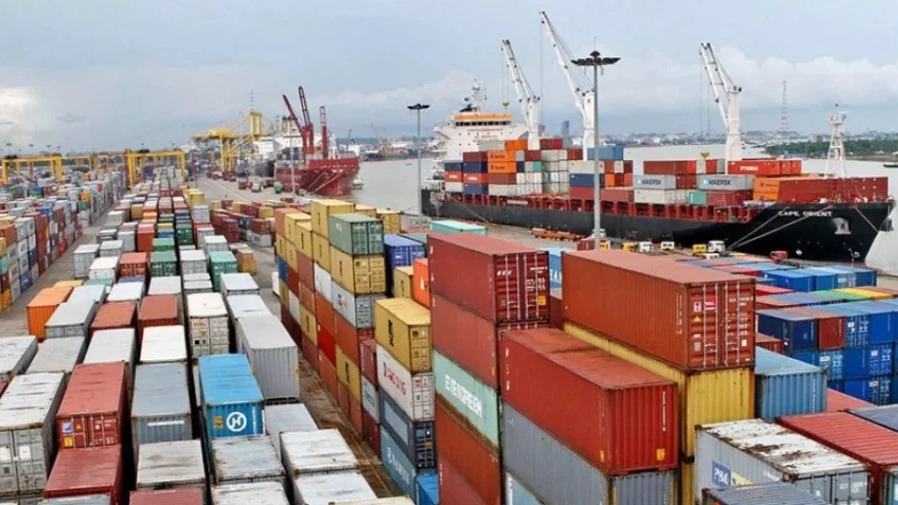
The new law that Bangladesh got after 53 years imposed a 10% penal tax in case of delays in releasing goods from the ports that often create congestion in the ports, affecting businesses.
The new law (in Bangla) was passed in parliament on Tuesday, scrapping the previous Customs Act-1969.
Despite placing it thrice before the parliament since 2014, the draft of the new law had been pending due to having a provision for empowering the customs authority with Magistracy power that would have infused a tug-of-war with the public administration cadres.
However, the new law has no such provision.
As per the new law, the customs authority would determine the rates of penalty on customs-related offences based on gravities and frequencies.
The penalty for customs-related irregularities ranges up to 800 per cent on businesses that vary depending on the offences.
The law, however, has made stakeholders consultation mandatory before bringing any changes, amendments or framing any rules on the new act.
International best practices and trade facilitation steps as per international agreements and conventions of World Customs Organization (WCO) have been incorporated in the new act.
Authorized Economic Operators (AEOs), Mutual Recognition Agreement (MRA), Electronic Declaration, Risk Management, Post Clearance Audit, and Non-intrusive Inspection have been incorporated in the new act.
It has also incorporated the most essential aspects of the Trade Facilitation Agreement of the World Trade Organization (WTO) such as Advance Ruling, Stakeholders consultation, national enquiry point, website, Advance Passenger Information (API), Passenger Name Record (PNR), etc.
It has also incorporated the provisions to check money-laundering, terrorist financing, import and export of dangerous arms.
A separate provision has been incorporated under AEO with green channels for honest businessmen.
The new law has provisions for electronic record keeping and payment.
Instead of cash payment of duty taxes, in any special case, the customs authority would allow collateral and bank guarantees.
It has defined the duties of importers and exporters, cut discretionary power of customs.
According to a feature of the new law, it has 269 sections, up by 46 ones from the previous law.