
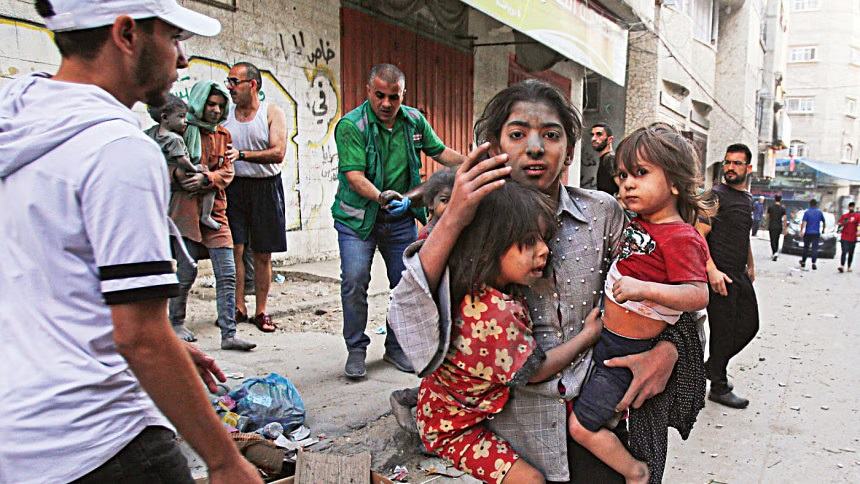
Most of the 2.3 million people in the Gaza Strip have no electricity and no water. And, with hundreds of Israeli strikes raining down on their tiny enclave, they have nowhere to run.
The health ministry in Gaza has just issued its latest update warning that the healthcare system "has begun to truly collapse".
The Palestinian territory, one of the most crowded places on Earth, has been under siege since Saturday in a near-constant bombardment that Gazan health officials say has killed 1,354 people. The blitz is retaliation for a devastating attack on Israel by Gaza's ruling group Hamas which the Israeli military says killed more than 1,300 people.
Gaza's sole power station, which had been working intermittently for days, cut out on Wednesday after running out of fuel. Without power, water can't be pumped into houses. At night there's nearly total darkness punctuated by fireballs and the pin-pricks of light from phones used as flashlights.
"I lived through all the wars and incursions in the past, but I have never witnessed anything worse than this war," said Yamen Hamad, 35, a father-of-four, whose home had been destroyed by Israeli strikes on the northern Gaza town of Beit Hanoun.
At a hospital in Khan Younis in southern Gaza, relatives and friends lined up outside the overloaded morgue where bodies were laid out on the floor because coolers were full or had no power.
The mourners were desperate to bury their loved ones swiftly before the unseasonable heat took its toll. They spoke briefly over the bodies, praying for the souls to rest in peace, before they carried them to graves nearby, with stretchers if they were available, or otherwise without.
Reuters interviewed more than three dozen people in Gaza, and most echoed Hamad's sentiments. They painted a picture of dread and hopelessness in the face of what they described as the worst violence they'd ever seen.
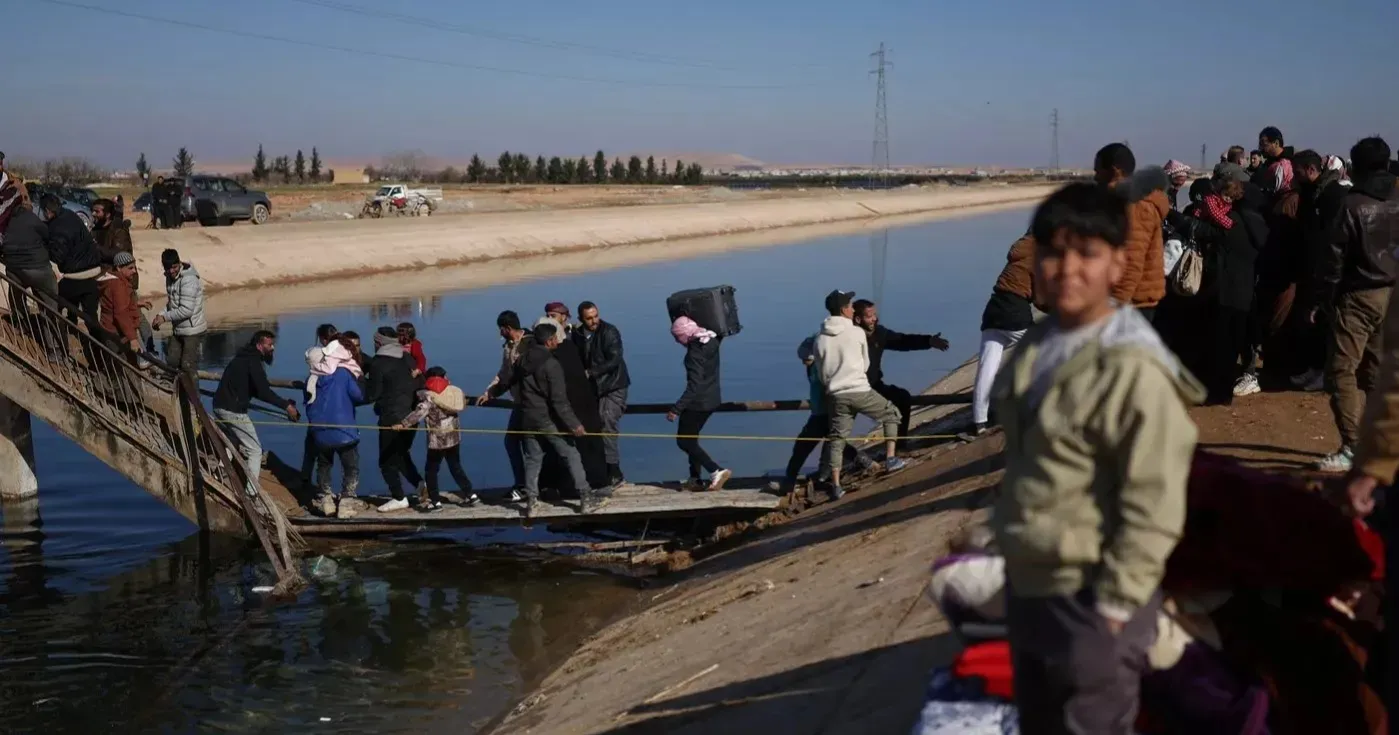
With the strip's only other border, to Egypt, blocked by Egyptian authorities, the people said they were trapped. They feared the worst was yet to come, including a possible ground invasion, as Israel seeks retribution for the deadliest Palestinian fighter attack in the country's 75-year history.
That surprise raid, launched on Saturday, saw Hamas fighters burst out of Gaza and kill hundreds of people, leaving corpses strewn around a music festival and a kibbutz community. Scores of Israelis and others have been taken to Gaza as hostages, some paraded through the streets.
The Hamas attack drew strong condemnation by the United States and other Western governments. The fighter group's 1988 founding charter called for Israel's destruction, and the group is branded a terrorist organisation by Israel, the United States, the European Union, Canada, Egypt and Japan.
Israeli Defence Minister Yoav Gallant has pledged intensify the military campaign in Gaza, saying on Wednesday that Israel would wipe Hamas "off the face of the Earth".
Beit Hanoun, near the frontier with Israel, was among the first places hit hard by retaliatory Israeli strikes, with many roads and buildings destroyed and thousands of displaced, according to Hamas and local residents. There was no escape for Ala al-Kafarneh's family.
The 31-year-old said he fled the town on Saturday with his pregnant wife, his father, brothers, cousins and in-laws. They drove to Beach Refugee Camp on the coast, where they hoped they would be safer, but air attacks began targeting that area too so they headed to Sheikh Radwan, another district deeper east.
Source: Reuters