

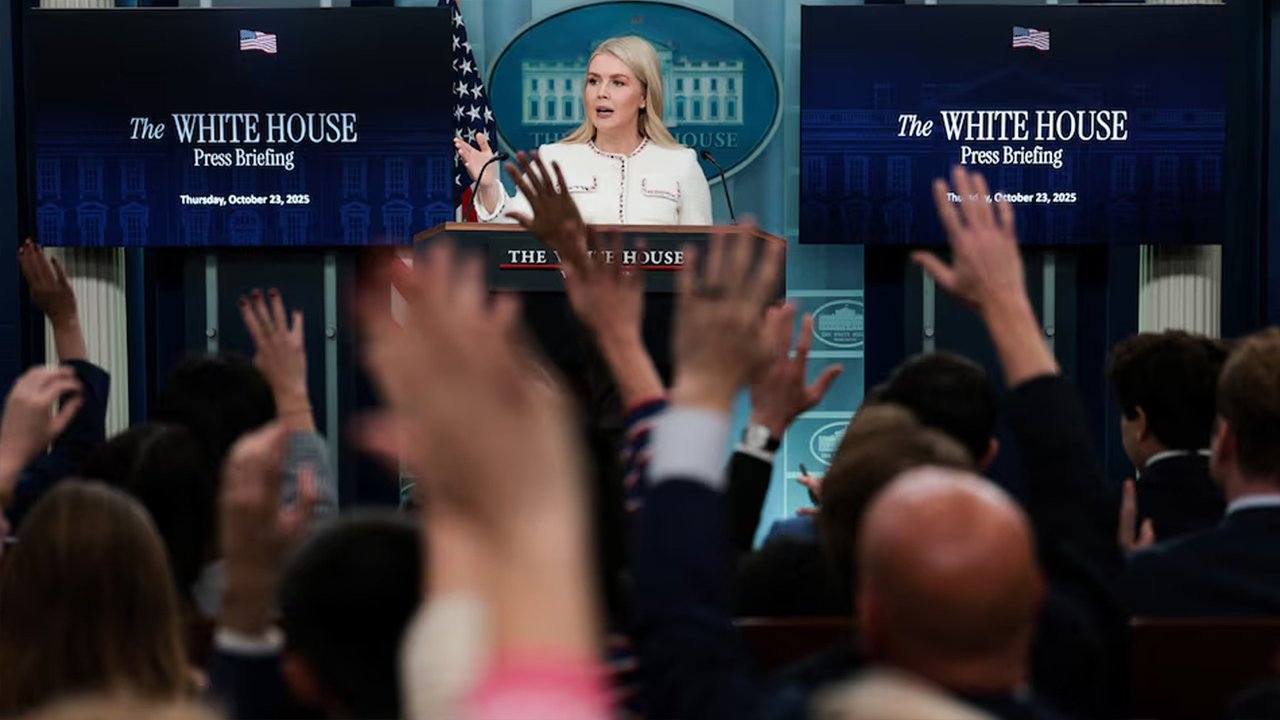
According to a memorandum issued by the National Security Council (NSC), credentialed reporters will no longer be permitted to enter Room 140, known as “Upper Press,” without a prior appointment. The policy takes effect immediately.
The NSC said the decision was made to safeguard potentially sensitive material now being routinely handled by White House communications officials.
“In order to protect such material and maintain coordination between National Security Council staff and White House communications staff, members of the press are no longer permitted to access Room 140 without prior approval in the form of an appointment with an authorized White House staff member,” the memo stated.
Previously, accredited journalists could freely enter Room 140 — located just steps from the Oval Office — to speak with Press Secretary Karoline Leavitt, her deputy Steven Cheung, and other senior aides.
Cheung defended the change in a post on X (formerly Twitter), saying some reporters had “secretly recorded video and audio” of offices and taken photos of sensitive information without permission. He also alleged that journalists had wandered into restricted areas or eavesdropped on private meetings.
“Cabinet secretaries routinely come into our office for private meetings, only to be ambushed by reporters waiting outside our doors,” Cheung wrote.
Journalists will still have access to another area of the White House where lower-level spokespeople are stationed, according to the memo.
The White House Correspondents’ Association (WHCA) condemned the new rule, saying it would undermine transparency and make it harder for reporters to hold government officials accountable.
“The White House Correspondents’ Association unequivocally opposes any effort to limit journalists from areas within the communications operations of the White House that have long been open for newsgathering, including the press secretary’s office,” said Weijia Jiang, the group’s president.
A similar restriction was announced by the Clinton administration in 1993 but was later reversed following strong criticism.
Friday’s move follows a recent clampdown on press access at the Department of Defense, which now requires journalists to sign new agreements acknowledging limits on their interactions with Pentagon staff. At least 30 news outlets, including Reuters, have refused to comply, citing threats to press freedom and independent reporting.


