
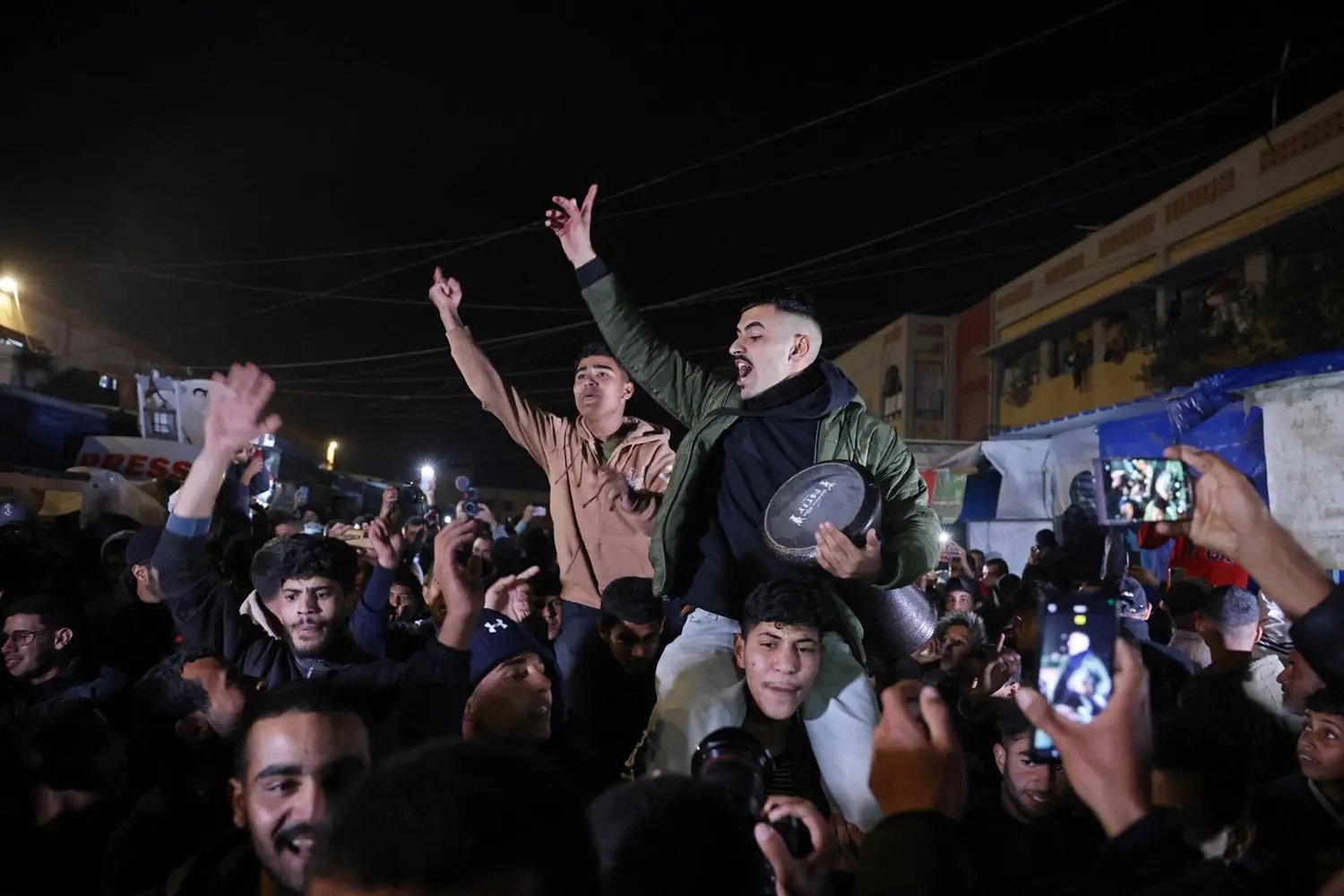
As news of the agreement spread, scenes of jubilation were seen in various parts of Gaza. Residents shouted “Allahu Akbar” while others played flutes, tambourines, and drums in spontaneous street celebrations.
Ghada, a mother of five from Gaza City, said she could not stop crying after hearing the news. “Yes, I am crying — but these are tears of joy. It feels like we are being born again. I hope this terrible war is coming to an end,” she told Reuters.
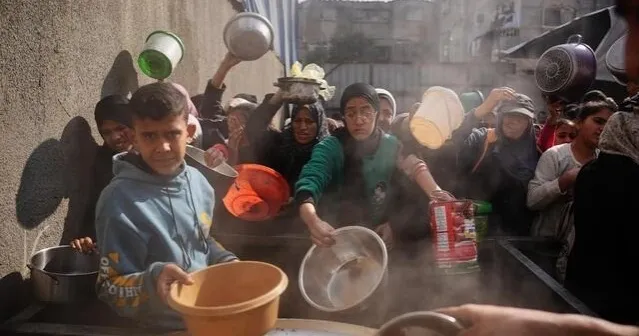
Ghada, whose home was destroyed by Israeli airstrikes 15 months ago, has been living in a tent with her family ever since.
The ceasefire plan was first announced by former U.S. President Donald Trump on Monday, September 29, at the White House in Washington, D.C. While Israel and mediators Egypt and Qatar immediately expressed support, Hamas initially withheld its response.
However, on Friday, October 3, Hamas formally agreed to the proposal. Following that, Trump called on Israel to halt its bombing campaign in Gaza starting October 4. On October 6, representatives from Israel, Hamas, Egypt, the United States, and Qatar convened in the Egyptian Red Sea resort city of Sharm el-Sheikh to finalize the details.
After more than two days of negotiations, Israel and Hamas signed the agreement late last night, committing to the initial six-week phase of the plan.
Under this agreement, Hamas will release all hostages it currently holds, while Israel will cease military operations in Gaza, release Palestinian detainees from Israeli prisons, and begin a gradual troop withdrawal from the enclave.
The announcement triggered widespread celebration in southern Gaza’s Khan Younis area. Crowds of residents poured into the streets, singing, dancing, and playing instruments in a rare moment of collective relief.
Iman al-Kouqa, a young woman from Gaza, said she was overwhelmed by conflicting emotions. “Today is our day of joy, but also a day of sorrow. We laugh for what we have regained, and we cry for what we have lost. We didn’t just lose our friends, relatives, and homes — we lost our city. Israel has pushed us back to prehistoric times with this war,” she said.
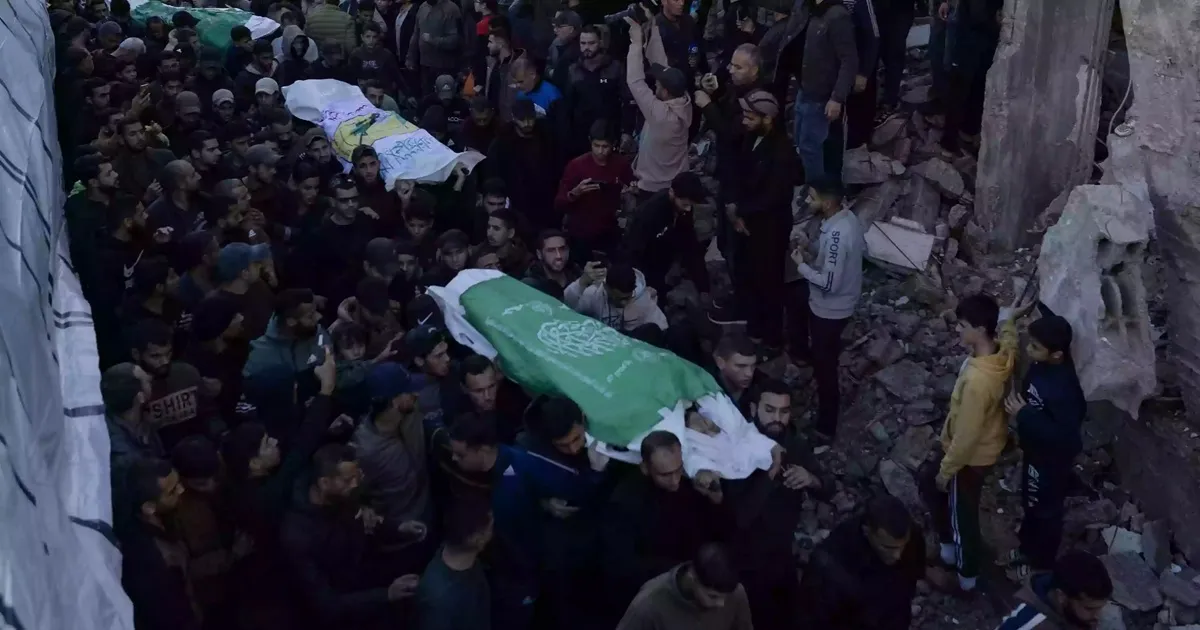
Another Gaza resident, Ahmed Dahman, who fled to the Deir al-Balah area of Khan Younis after his home was destroyed last year, told Reuters that he lost his father in an Israeli airstrike but was unable to bury him. “Finally, the bloodshed in Gaza is stopping, and lives are being saved — that’s good news. But I worry about what comes next. When we return home, there will be nothing left,” he said.
Ahmed added, “My first task when I return will be to find my father’s remains and give him a proper burial.”
His mother, Bushra Dahman, echoed the bittersweet sentiment. “This ceasefire will not bring back my husband, but at least many lives will be spared,” she said. “I will cry — cry tears like I have never cried before. This cruel war didn’t even give us time to mourn.”