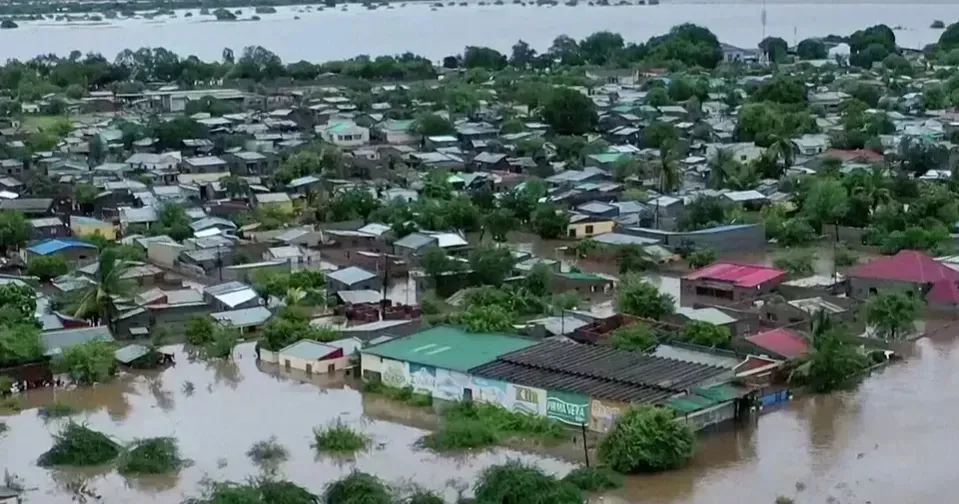

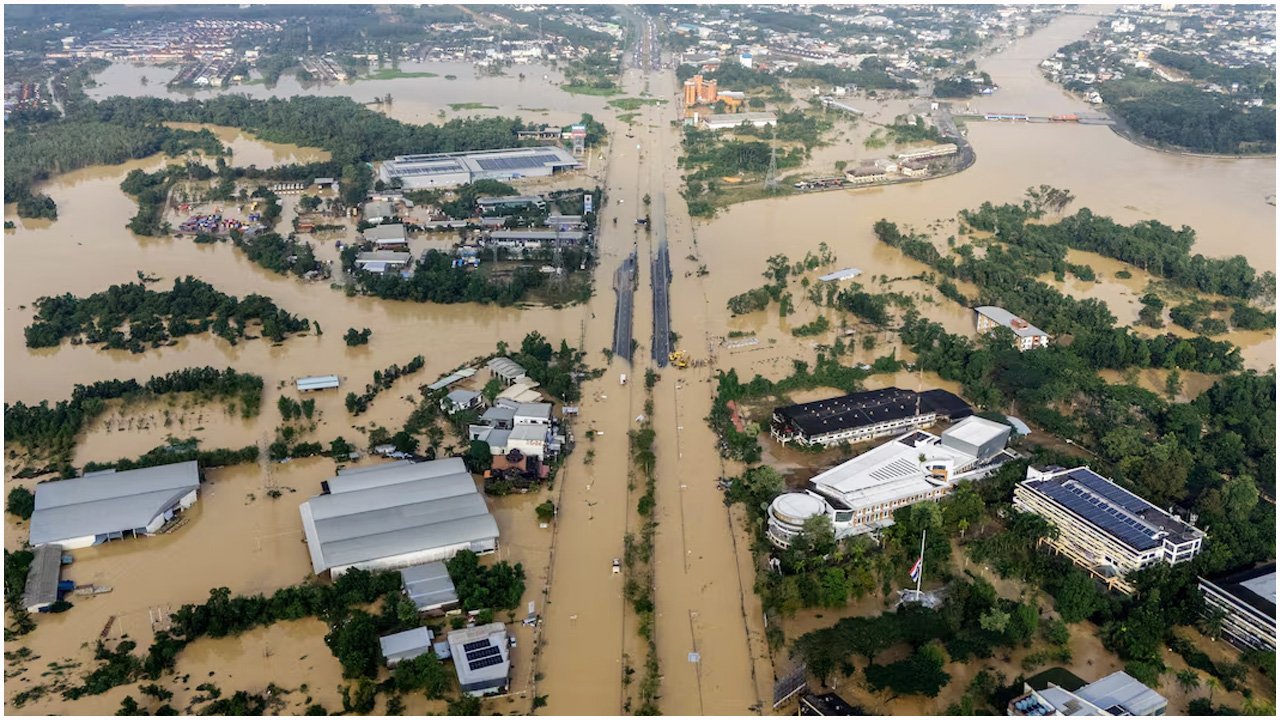
In Thailand, flood relief teams are using drones to deliver aid to residents stranded by rising waters, while helicopters are transporting essential supplies to people trapped on rooftops. The country is experiencing its worst flooding in years, with the death toll rising to 55.
Meanwhile, in Indonesia, floods triggered by a tropical cyclone have killed at least 61 people, with rescue operations continuing in difficult conditions.
Thai government officials said a week of intense rainfall has inundated nine southern provinces, leaving 55 people dead. In Indonesia’s Sumatra island, rescuers are struggling to reach those stranded by landslides and flooding across three provinces.
To intensify rescue efforts, Thailand has deployed a navy aircraft carrier, 20 helicopters and numerous trucks carrying food, medicine and small boats. Authorities have urged residents to use boats to reach people stranded for days, as floodwaters rose to as high as seven feet in some areas.
In Hat Yai, one of the hardest-hit cities in Thailand, floodwaters began to recede on Thursday, allowing emergency services to resume operations and restore communication lines.
Nearly three million people in southern Thailand have been affected, while thousands remain in evacuation centers. In neighboring Malaysia, similar flooding has struck seven states, killing at least two people and forcing more than 34,000 residents into emergency shelters.
In Indonesia, a powerful tropical cyclone has caused deadly flooding and landslides on Sumatra—an island home to 60 million people. At least 100 people remain missing. Rescue efforts are being hampered by power outages and damaged infrastructure.
Footage aired by local broadcaster Kompas TV showed a massive landslide cascading down a hillside, with floodwaters—about 3.5 feet high—carrying tree branches and debris. Videos released by Indonesia’s rescue agencies show people being pulled into orange rubber boats amid strong currents and heavy rain. Images from West Sumatra depict rescuers retrieving bodies and vehicles piled together after being washed away by the floods.
Meteorologists say the extreme weather may be linked to the interaction between Typhoon Koto in the Philippines and an unusually active Cyclone Senyaar system in the Strait of Malacca.
Source: Reuters