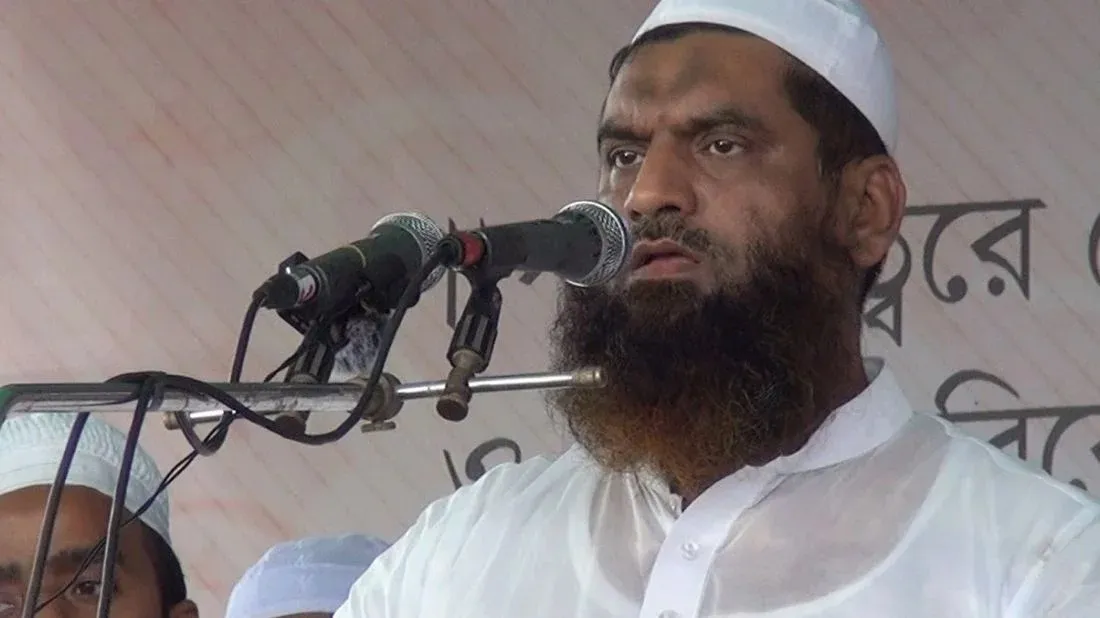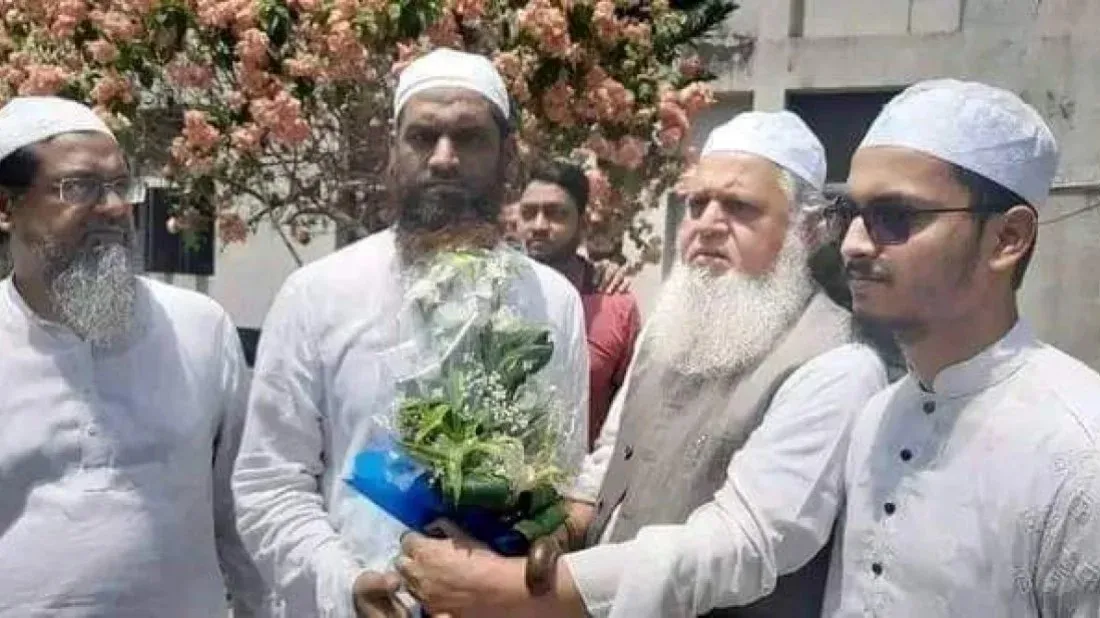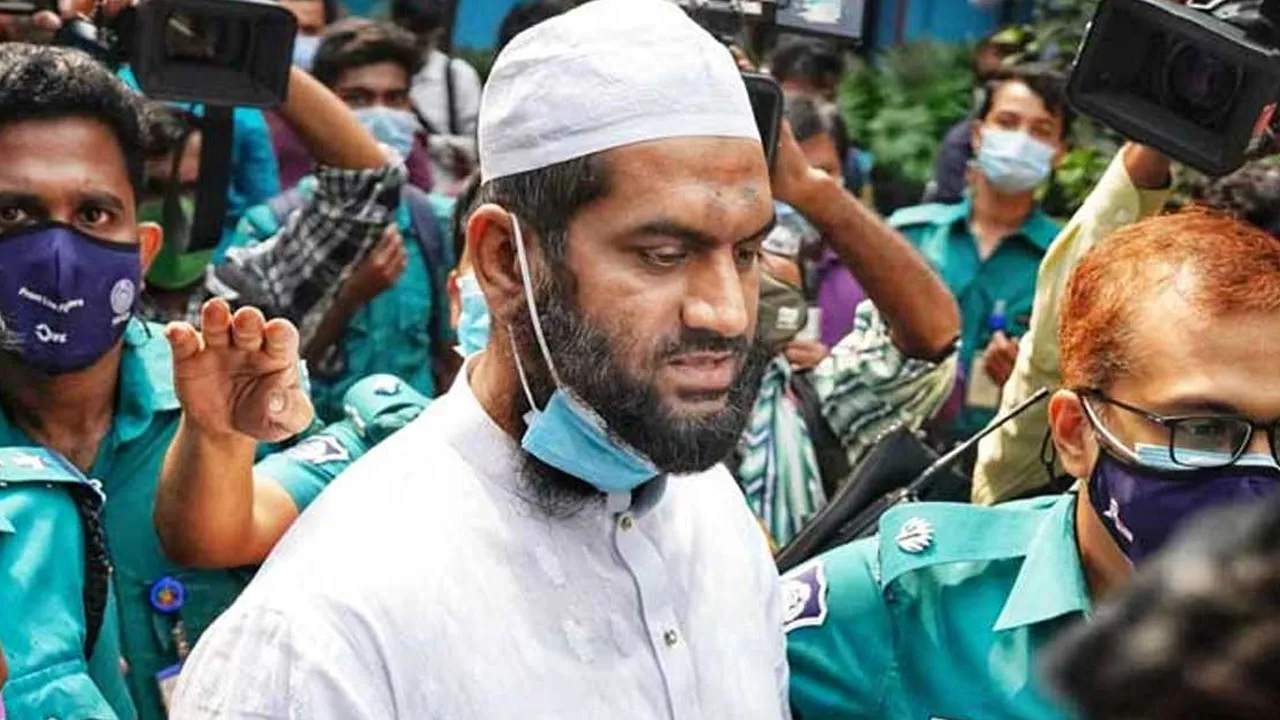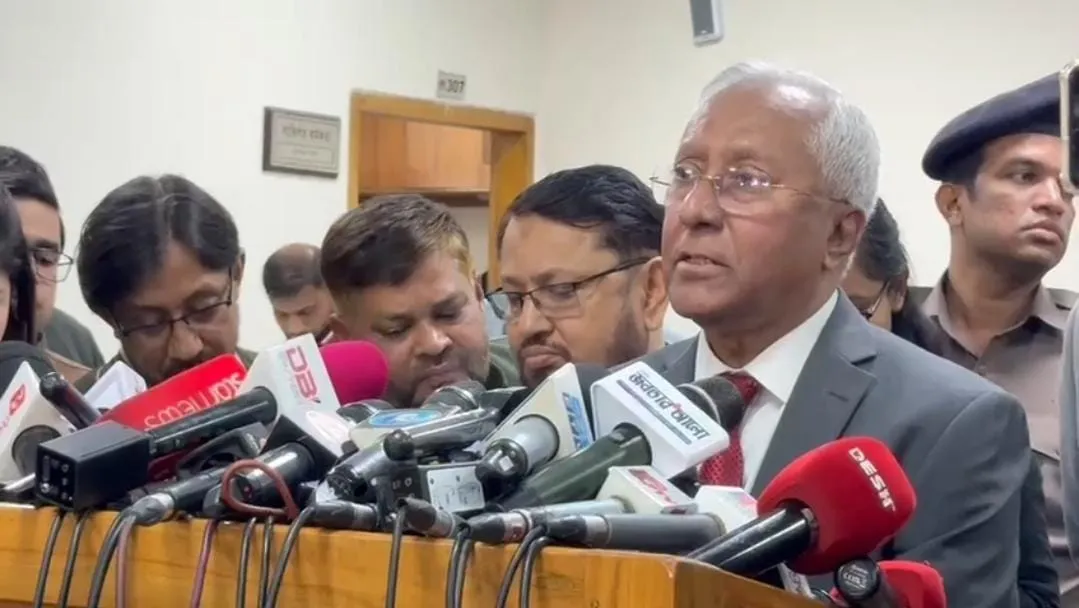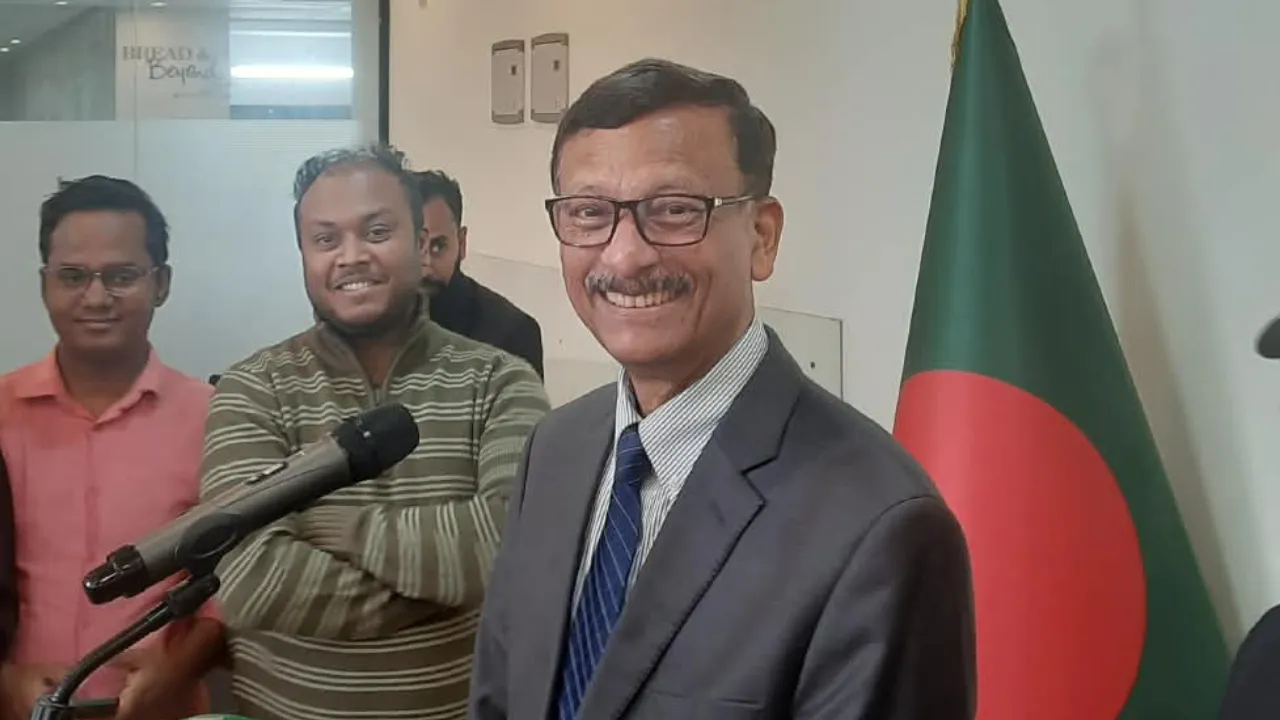

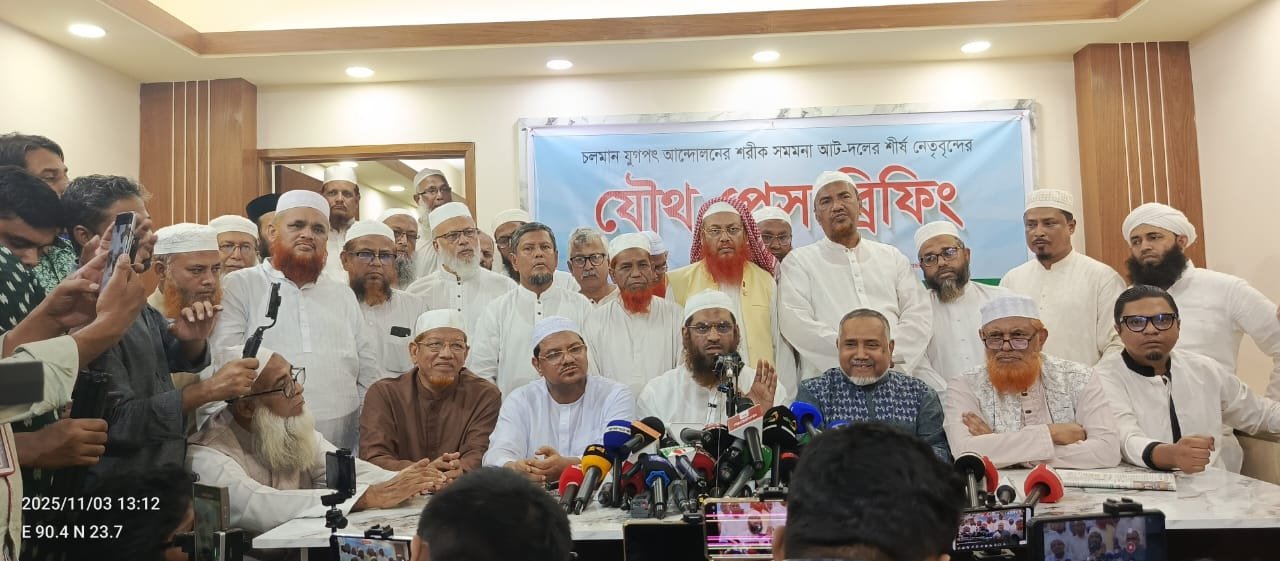
The eight-party alliance, including Bangladesh Jamaat-e-Islami, has announced a fresh set of programs to press for the implementation of their previously declared five-point demands. The announcement came on Monday (November 3) at a press conference held at the central office of Bangladesh Khelafat Majlis in Purana Paltan, Dhaka. The program was announced by Maulana Mamunul Haque, Ameer of Bangladesh Khelafat Majlis.
Maulana Haque stated that Bangladesh is now at the threshold of the 13th National Parliamentary Election. However, despite the approaching polls, the implementation of the “July Charter” — a key political framework for national consensus — has not yet been ensured. “In this situation, the eight like-minded parties have no alternative but to continue the movement to realize the five-point demands,” he said.
He emphasized that the legal enactment of the July Charter has become an urgent necessity. “People want a transparent election and credible results, but without legal foundation, the July Charter cannot be implemented effectively,” he said.
Maulana Haque demanded that the government immediately issue an executive order to implement the July Charter and hold a separate referendum before the national election to confirm the people’s opinion. He warned that any unilateral amendment to the Representation of the People Order (RPO) would not be accepted by the alliance. “If the RPO is changed, it will further erode trust in the electoral process,” he added.
He further noted that meaningful dialogue among political parties could lead to a solution, and that a legal foundation for the July Charter would make the election environment far more credible.
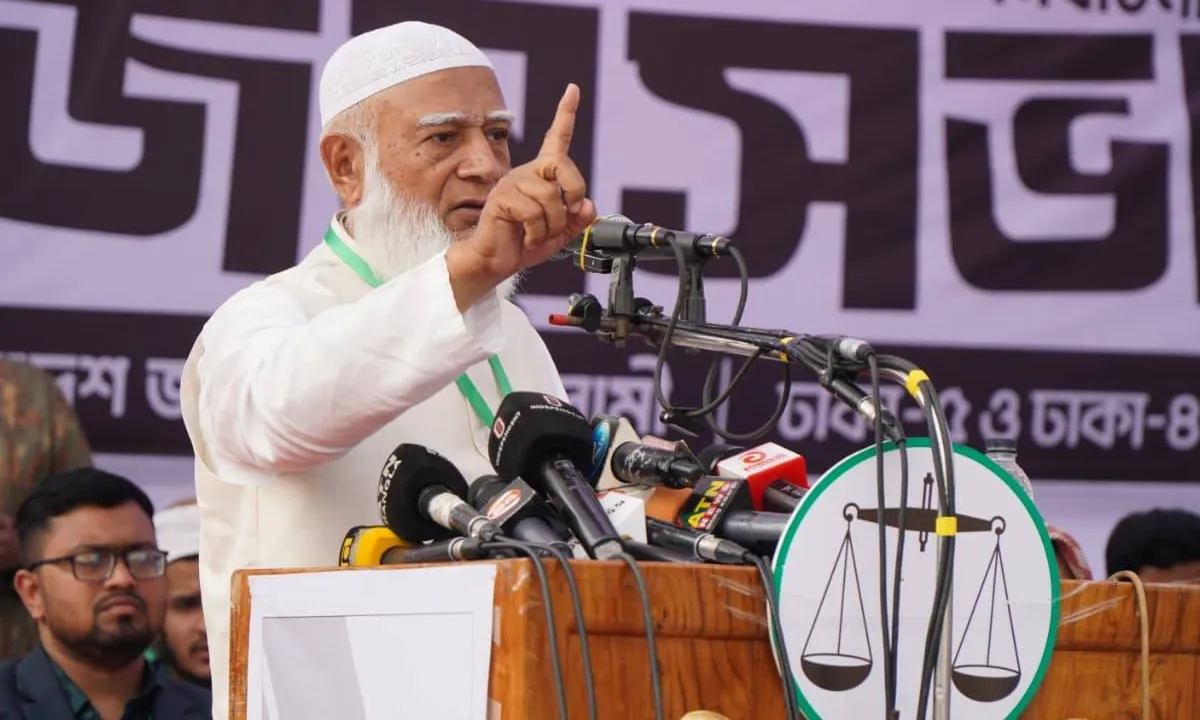
Speaking at the press conference, Jamaat-e-Islami’s Nayeb-e-Ameer Dr. Syed Abdullah Mohammad Taher said that the alliance had already reached consensus in earlier meetings, but “suddenly one party deviated from that consensus.” He expressed hope that the party would soon clarify its position.
Dr. Taher reiterated that shifting the timeline for the referendum would be pointless without implementing the July Charter. “The referendum must be held separately to make the Charter effective,” he said, adding that if it coincides with the election, public focus will shift to political competition rather than the referendum itself.
The alliance announced two upcoming programs — a mass procession on November 6 at 11 a.m. towards the Chief Advisor’s office to submit a memorandum, and a protest rally in Dhaka on November 11.
Maulana Haque expressed optimism that within the seven-day timeframe given by the government, political parties would engage in dialogue and reach a resolution. “The only path to political transparency and peaceful transformation lies in implementing the July Charter and ensuring people’s participation in decision-making,” he said.
Leaders present at the event included Islami Andolan Bangladesh’s Ameer Mufti Syed Muhammad Rezaul Karim (Charmonai Pir), Maulana Yunus Ahmad, Professor Ashraf Ali Akon, Jamaat’s Nayeb-e-Ameer Dr. Syed Abdullah Mohammad Taher, AHM Hamidur Rahman Azad, Nezame Islam Party’s Mufti Harun Izhar, Bangladesh Khelafat Majlis Ameer Maulana Mamunul Haque and Secretary General Maulana Jalal Uddin, Khelafat Majlis Secretary General Dr. Ahmad Abdul Qader, and JAGPA spokesperson Rashed Pradhan, among others.
Earlier in the morning, the alliance held a joint meeting at the same venue, attended by top leaders of the eight parties — Bangladesh Jamaat-e-Islami, Islami Andolan Bangladesh, Bangladesh Khelafat Majlis, Khelafat Majlis, Khelafat Andolan, Nezame Islam Party, Jatiya Ganatantrik Party (JAGPA), and Development Party.
At the press conference, speakers warned that if the legal framework for the July Charter is not finalized, the public will lose confidence in the election and the democratic process will be undermined. They stressed that only through political consensus and public participation can a stable and acceptable solution emerge. The alliance reaffirmed that it seeks peaceful political resolution, not conflict, and urged both the government and political parties to return to the negotiation table.