

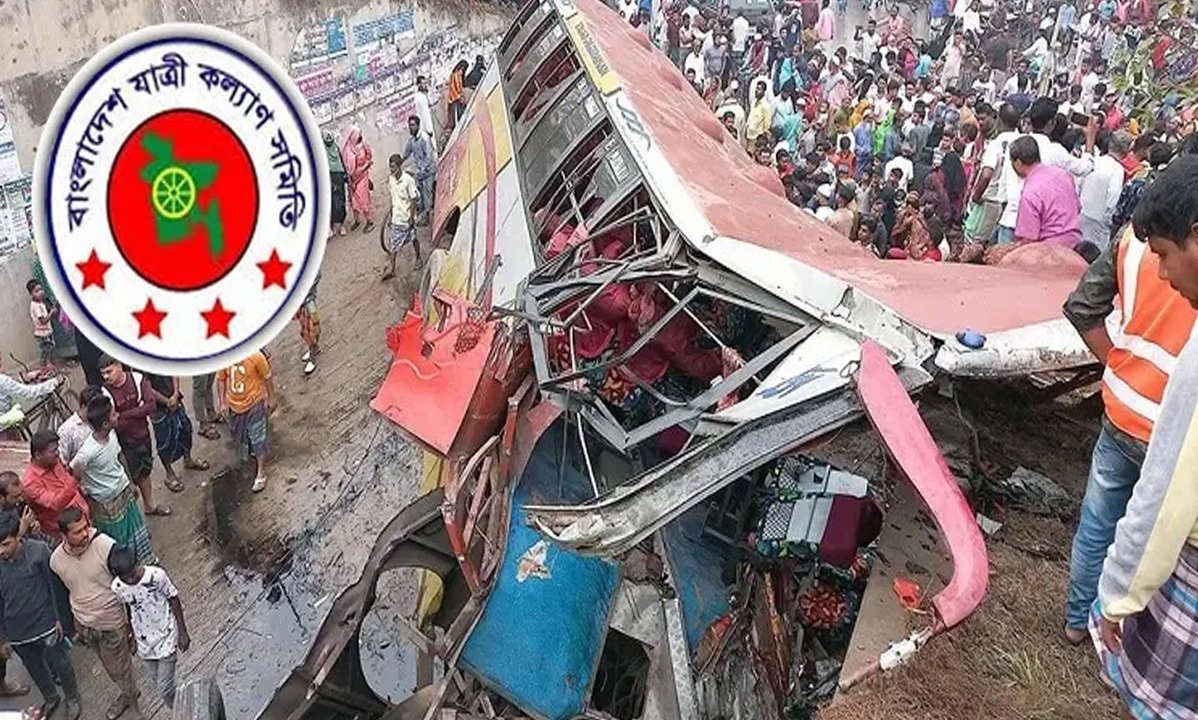
The organization blamed rampant corruption, policy failures, and anarchy in the transport sector for this worsening crisis.
The data was disclosed by the association’s Secretary General Md. Mozammel Haque Chowdhury at a press conference marking National Road Safety Day 2025, held at the Sagar-Runi Auditorium of Dhaka Reporters Unity (DRU) on Tuesday (October 21).
“If effective action is not taken immediately, this horrific trend of road deaths will continue—and every journey will remain at risk,” warned Chowdhury.
12 Years of Road Tragedy
According to the association’s report, road fatalities have continued to rise in recent years.
Yearly Statistics:
2014: 5,288 accidents; 8,489 deaths; 17,424 injuries
2015: 6,580 accidents; 8,632 deaths; 23,555 injuries
2016: 4,312 accidents; 7,064 deaths
2017: 4,819 accidents; 7,317 deaths
2018: 5,225 accidents; 9,221 deaths
2019: 5,514 accidents; 7,555 deaths
2020: 4,875 accidents; 6,866 deaths
2021: 5,625 accidents; 7,831 deaths
2022: 6,833 accidents; 9,921 deaths
2023: 6,266 accidents; 7,922 deaths
2024: 6,371 accidents; 8,343 deaths
2025 (Jan–Sept): 5,171 accidents; 6,023 deaths; 11,764 injuries
The report also noted that if the mortality rate during treatment—estimated at around 15 percent—is included, the actual number of deaths could be significantly higher.
“Corruption Turned Roads Into Death Traps”
Chowdhury said that before independence, nearly 80 percent of Bangladesh’s population used to travel by waterways and railways, where accidents were rare. However, after independence, corruption and unplanned road development projects—often influenced by donor agencies—shifted 80 percent of travel dependency onto roads, without creating an integrated transport network.
He accused successive governments of allowing unfit vehicles, unlicensed or underage drivers, reckless speeding, and extortion by police and transport syndicates to go unchecked.
“Lawlessness has reached its peak due to corruption and poor policy. Extortion by transport leaders and corrupt police officers has turned our roads into death traps,” he added.
Government Failure and Policy Challenges
Chowdhury criticized former Road Transport and Bridges Minister Obaidul Quader, saying his long tenure failed to produce an effective strategic transport plan. He added that the current government’s unchanged policies continue to cause daily fatalities.
“Despite development in many sectors, the transport system remains road-dependent. Safe and affordable waterways and railways are being neglected, while pedestrians lack proper infrastructure,” he said.
He also noted that unregulated vehicles—such as battery-run rickshaws, ride-sharing bikes, CNG auto-rickshaws, Nasimon-Karimon, and Leguna-type vans—have worsened the situation, showing that the government has lost control of the road transport system.
Association’s Warning
The association emphasized that traffic congestion, accidents, and fatalities cannot be reduced without restoring order, transparency, and accountability in the transport sector.
12-Point Recommendations
To curb road fatalities and restore discipline, the Bangladesh Passenger Welfare Association proposed the following measures:
Rebuild waterways and railways to create an integrated transport network.
Stop corruption and extortion in the transport sector.
Launch underground metro rail in Dhaka, Chattogram, and other divisional cities.
Introduce two BRT lanes in every divisional city based on digital transactions.
Develop quality bus networks from district to upazila level.
Regulate motorcycles, battery and CNG-powered auto-rickshaws.
Provide state-funded driver training programs.
Establish a digital traffic training academy.
Ensure compensation for road accident victims through government initiatives.
Include passenger and victim representatives in transport decision-making bodies.
Ensure rule of law and accountability of transport officials.
Build dedicated lanes and safe sidewalks for cyclists and pedestrians nationwide.
The organization concluded that unless the government takes urgent and effective measures, Bangladesh’s roads will continue to remain one of the deadliest in the world.


