

The Chhatra Dal panel did not win any seat in the central body, and had boycotted the election citing vote rigging.
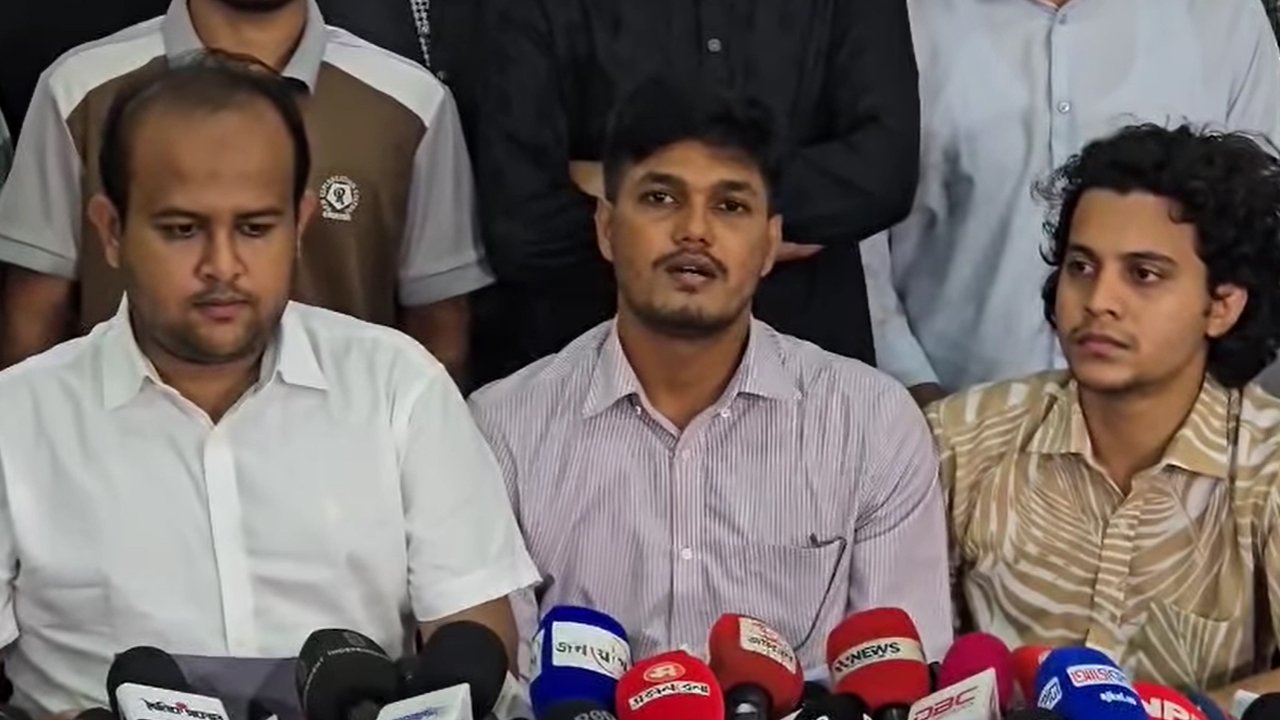
On Monday morning, Chhatra Dal-backed vice president candidate Abidul Islam Khan presented the allegations at a press conference held at Madhur Canteen in Dhaka University.
Abidul Islam Khan said that although students spontaneously participated in the Ducsu election held on September 9, the failure of the administration and the interference of certain groups meant the election was not free and fair. He said the voting rights of thousands of students were put into question.
He added that despite repeatedly informing the authorities in line with the law and regulations, the administration did not take effective action. Instead, there were deliberate delays.
According to him, this election is set to be recorded in history as a questionable one. At the same time, he said that Dhaka University administration should return to the democratic principles of transparency and accountability, conduct a proper investigation, and reveal the truth.
At that time, he mentioned 11 irregularities in the Ducsu polls. They are as follows:
- Allegations were made that signatures were placed on the voter list before voters arrived and ballot papers were supplied in favour of a particular panel, among other frauds. Although applications were made for the voter list and CCTV footage, the university administration did not take effective measures.
- Ballot papers were not numbered, creating opportunities for manipulation. Moreover, the number of printed, distributed, used, and returned ballots was not disclosed. Despite repeated requests from candidates, the administration delayed in providing the information.
- The press where the ballots were printed was kept secret. Later, a large number of ballots were found unsecured in a printing house in Nilkhet.
- The verification of the vote-counting machine and software was completed in secret. Neither candidates nor voters were informed. This raised doubts about the credibility of the counting.
- Although each centre was supposed to have one polling agent, many proposed agents of candidates were dropped when the list was published the night before the vote. The process of selecting agents was also kept secret.
- ID cards were not provided to agents on time. As a result, many agents could not enter the polling centres. Voting at several centres was conducted in a biased environment.
- Candidates were informed that voting would be held at eight centres, but on election day, it was seen that voting took place at 18 centres. This prevented most panels from appointing sufficient agents, except for one particular panel.
- There was a lack of clarity in the appointment of polling officers. Instead of the chief returning officer, the university administration appointed them directly. Many polling officers, unfamiliar with the code of conduct, provided false information to journalists.
- The role of BNCC, Rover Scout, and girls’ guide members responsible for security was questioned. Allegations were made that they allowed outsiders to enter with their assistance. Students even detained some outsiders and handed them over to the proctor’s office.
- Polling agents were practically kept inactive during the counting. Many agents were kept away from the process. As a result, most left the centres without signing the result sheets.
- Along with the use of non-transparent ballot boxes, many booths ran out of marker pens after noon, forcing voters to use ballpoint pens. It was alleged that votes cast with ballpoint pens were not counted in the OMR machine. There were also suspicions that the ink used on fingers was temporary, allowing multiple votes to be cast.


