

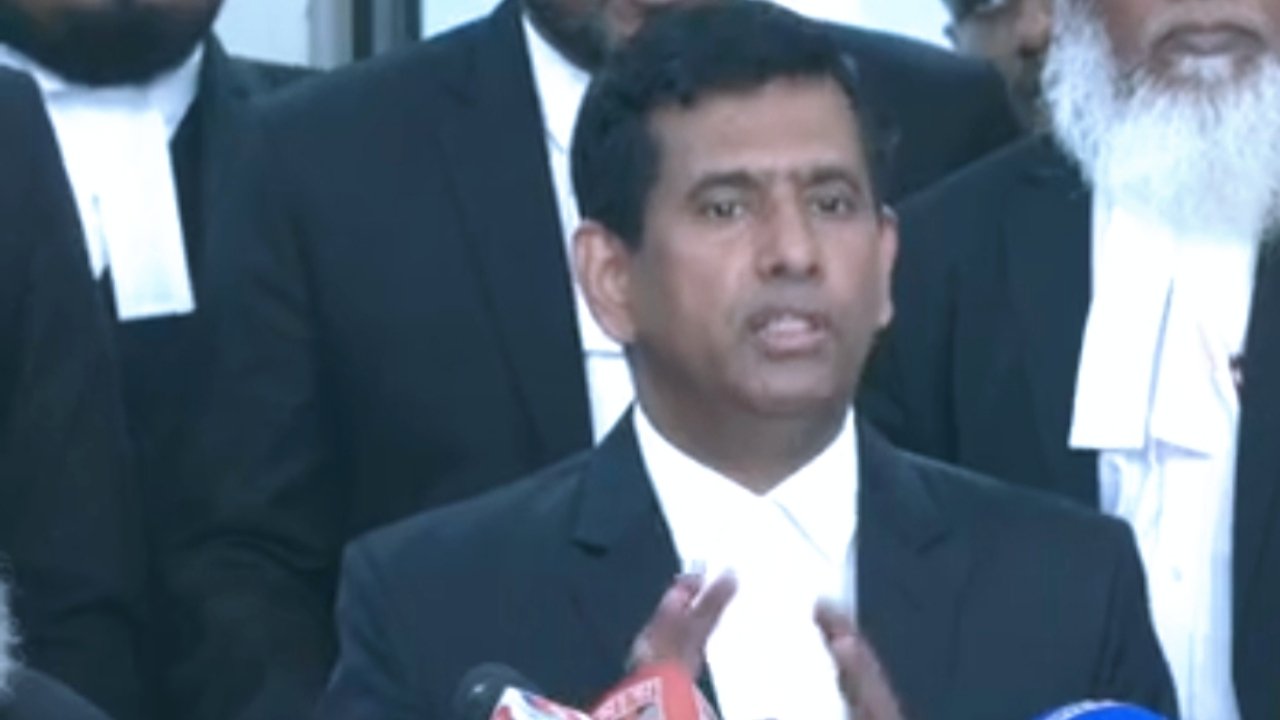
Speaking at a press briefing at the tribunal premises on Sunday (October 12), the Chief Prosecutor explained that the International Crimes (Tribunals) Act, 1973 was specifically enacted to prosecute members of various disciplinary and law enforcement forces for crimes that are not defined under Bangladesh’s general laws, or within the legal frameworks of the army, navy, or air force.
“The International Crimes Tribunal Act is a special law. The crimes it addresses — such as war crimes, crimes against humanity, and genocide — are recognized in international law. Therefore, these offenses must be tried only under this act,” Tajul Islam said.
Responding to questions from journalists regarding the arrest warrants issued for military officers in connection with disappearance cases, he emphasized that the law must take its own course.
“When a court issues an arrest or any other warrant, the accused must be produced before the court within 24 hours of arrest — excluding the time required for transport. This is not only a provision under the tribunal act but also enshrined in the Constitution and the Code of Criminal Procedure,” he said.
He clarified that only the court has the authority to decide whether an arrested person should be detained or released.
“If the court authorizes detention, they will be detained. If the court orders release, they must be released. The power to decide lies solely with the court,” the Chief Prosecutor added.
When asked about the reported detention of 15 army officers, Mohammad Tajul Islam said that the prosecution had not received any official communication on the matter.
“Since no one has officially informed us that they have been detained, we cannot comment based on media reports. If they are indeed under custody, the law requires that they be presented before the court within 24 hours. Until we are formally notified, I prefer not to make any assumptions,” he said.
He further noted that the International Crimes Tribunal Act was created to prosecute war crimes, crimes against humanity, and genocide, and that the law holds supremacy over other national laws, even the constitution.
“The constitution itself recognizes that the International Crimes Tribunal Act will prevail, even if any of its provisions appear inconsistent with the constitution. No writ petition can be filed in the High Court challenging any part of this law. Therefore, all individuals must follow the trial process defined under this act — there is no scope to bypass it,” the Chief Prosecutor asserted.
Tajul Islam concluded by reaffirming that the tribunal would proceed strictly in accordance with legal and constitutional provisions to ensure justice in cases involving crimes against humanity and other serious offenses.


