
The Directorate General of Health Services (DGHS) confirmed the figures in a press release issued by its Health Emergency Operations Center and Control Room on Tuesday (October 28).
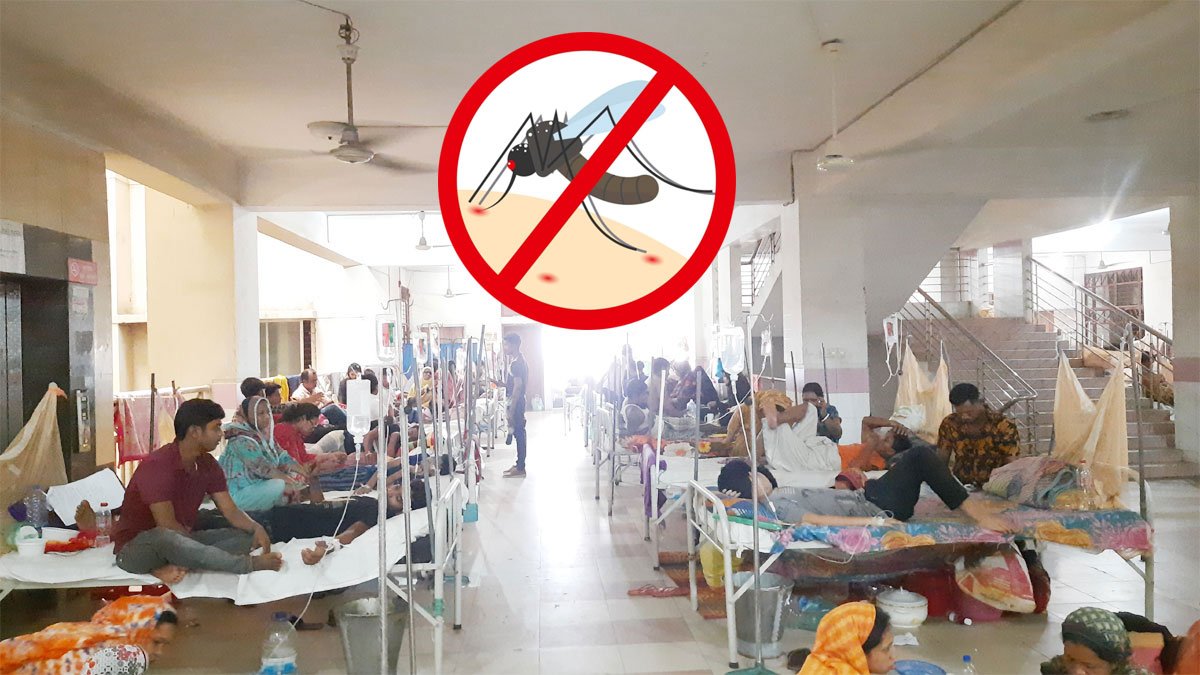
According to the DGHS report, between 8 a.m. on Monday (October 27) and 8 a.m. on Tuesday (October 28), 206 patients were admitted to hospitals in Dhaka city, while 370 were hospitalized in Dhaka division outside the capital. In other divisions, 174 new cases were reported in Barishal, 120 in Chattogram, 59 in Khulna, 49 in Mymensingh, 45 in Rajshahi, 19 in Rangpur, and 9 in Sylhet.
Among the four latest deaths, one occurred at Dhaka Medical College Hospital, one at Mugda Medical College Hospital, one at LabAid Hospital, and one at Mymensingh Medical College Hospital. The deceased include one man and three women, aged between 7 and 63 years.
DGHS data show that September recorded the highest number of dengue deaths this year, with 76 fatalities. Earlier, 10 people died in January, three in February, none in March, seven in April, three in May, 19 in June, 41 in July, and 39 in August. So far in October, 75 people have died from dengue.
Hospital admissions also peaked in September, with 15,866 patients. The number of hospitalizations in previous months were: January 1,161, February 374, March 336, April 701, May 1,773, June 5,951, July 10,684, and August 10,496.
According to DGHS statistics, from January to December 2024, a total of 1,11,214 people were infected with dengue nationwide, and 575 lost their lives. In comparison, 2023 saw 1,705 dengue-related deaths and 3,21,179 hospitalizations—marking the deadliest outbreak in the country’s history.
Health authorities have urged citizens to remain vigilant, destroy mosquito breeding sites, and seek immediate medical attention if dengue symptoms appear, as the disease continues to pose a serious public health threat.