
Time News Desk: Opening fire by police on people is an extreme measure requiring observance of certain rules, it appears that the rules concerned were ignored during police firings on political demonstrations and protesters lately, resulting in deaths and injuries.
The recent killing of three Bangladesh Nationalist Party activists in Bhola and Narayanganj and a 10-month-old baby in Thakurgaon in police firings has sparked outrages, calling police roles and firings into a serious question.
Senior police officials, serving and retired, as well as rights activists said that police personnel of late had been acting ‘politically’ and using force and firearms indiscriminately in violation of stipulated regulations, procedures and practices.
Former National Human Rights Commission chair Mizanur Rahman said that the police force appeared to be lacking efficiency and training for properly responding in crisis situations, adding that the force has been used politically by the ruling quarters for a long time. Besides, a culture of impunity, he observed, has plagued the force as its leadership has never held the deviants to account for such deaths and injuries.
The force members responsible for such deaths rather were rewarded with better postings and promotions, said Professor Mizanur, also a professor of law at Dhaka University.
According to media reports, at least 11 people were killed as police opened fire into political and other protest rallies and during electoral violence in the past one and a half years in Chandpur, Noakhali, Bhola, Narayanganj, Thakurgaon and Habiganj.
In the four latest police firing deaths, the victims were hit by bullets in the head, face and chest, according to police inquests, medical reports and case statements.
According to senior police officials, there are clearly defined regulations as to when police can open fire and what procedures they must follow in the act.
Besides, there remain a practice and informal instructions that if situations demand that firing is necessary, law enforcers should shoot below the knees to avoid major injuries or fatalities.
Former additional inspector general of police Mokhlesur Rahman said, ‘There have been allegations of using the police force for political gains since the beginning of the British colonial rule and the situation has changed little. The force still faces such allegations.’
But, he noted, the police members are required to receive training on how to deal with mobs and crisis situations like violence and riots.
According to the Police Regulations of Bengal,1943, an order to fire upon a crowd should be regarded as an extreme measure, which is to be taken as the last resort when it is absolutely necessary for the defence of life or property.
Regulation 153 of the regulations says, ‘Force should not inflict more harm than is necessary for protection but may extend to the causing of death.’
The regulation further says, ‘Before an order is given to fire upon a crowd, the magistrate or, if no magistrate is present, the police officer in command shall give full and sufficient warning to the rioters that they will be fired upon if they do not disperse immediately.’
The victims of and witnesses to recent violent incidents complained that police personnel indiscriminately opened fire on peaceful rallies without any provocation, nor the law enforcers concerned gave any warning before the firings.
They even opened fire from close range targeting upper parts of the bodies, including the head, the chest and the face.
Bhola district unit Jatiyatabadi Chhatra Dal president Nure Alam and Swechchhasebak Dal activist Abdur Rahim were shot dead and scores were injured as police opened fire on the rally of opposition activists held in Bhola Sadar on July 31 to protest price rises.
Bhola JCD activist Md Sohel, also friend of Nure Alam, said that they had a scheduled protest programme in Bhola town on July 31 and a number of opposition activists were waiting for their procession to start when police started charging batons on them.
‘The activists took shelter in an alley but police opened fire on them from close range. Alam was shot in the head and collapsed. The police then shot him again,’ said Sohel.
Alam’s autopsy was carried out at the Dhaka Medical College Hospital morgue.
DMCH forensic department head Mokhlesur Rahman, who led the post-mortem, later said that they had found pellets in the head of Nure Alam.
The case filed by Rahim’s wife Khadiza Begum with the Bhola Senior Judicial Magistrate Court stated that Rahim was shot in the head and different parts of the body. Police also hit Rahim’s head with their firearms, according to the case.
In the latest incident, Juba Dal activist Raja Ahmed Shaon was killed in police firing on a 44th anniversary rally of the BNP in Narayanganj town on September 1.
Sub-inspector Mahfuzur Rahman Kanak of the Narayanganj district detective branch was reportedly seen using a rifle to shoot Shaon.
Video footage recorded by journalists on the spot showed that Mahfuz fired four bullets from the rifle into the victim’s body above his knees.
Shaon’s post-mortem was performed at Narayanganj General Hospital.
The hospital’s resident medical officer, Sheikh Farhad, on September 11 said that the autopsy report was yet to be completed.
Providing primary findings, a doctor, however, said that though there was no bullet found inside the body of the victim, two wounds found at his chest and back seemed to have caused by the penetration and exit of a bullet.
A youth, who took part in the rally, said that police did not issue any warning before opening fire and they were aiming at upper parts of the bodies.
Earlier, on July 27, a 10-month-old baby named Suraiya was killed after being hit by a bullet in the head in police firing at Bachor union in Ranishankail upazila of Thakurgaon.
Police opened fire during electoral violence and the bullet hit the child’s head, blowing off the skull, in her mother’s lap, Suraiya’s father Mohammad Badsha said.
Professor Habibur Rahman, who carried out the baby’s autopsy at M Abdur Rahim Medical College Hospital in Dinajpur, submitted the examination report to the police.
Doctors at the time said that either a bullet or a different object hit the head of the infant who was killed during the polls-time violence in Thakurgaon.
‘The baby has died because of serious injuries in the left side of her head,’ Habib said then.
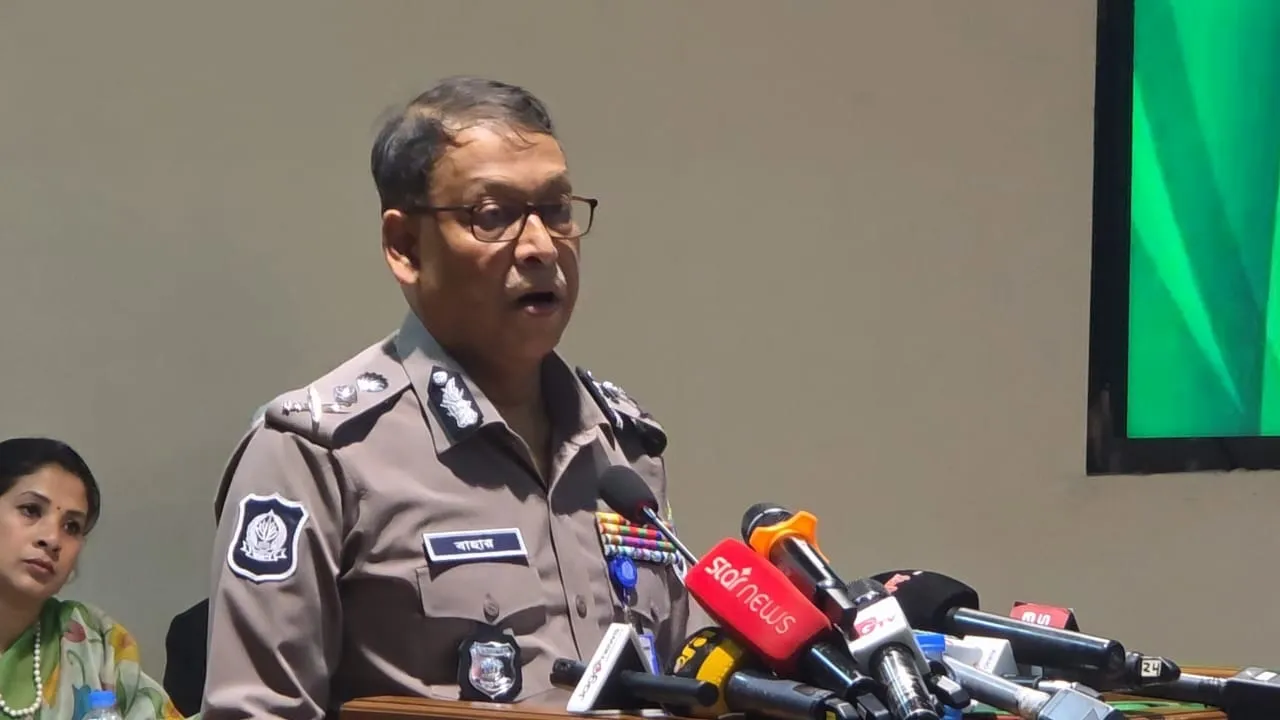
Police headquarters deputy inspector general for operations and media Haider Ali, however, claimed to that the police followed all the due procedures and asked people to calm down and refrain from violence in violent situations before taking actions, including opening firing.
He said, ‘Police personnel at first give warning to the people [concerned] and ask them to stop violence. Then they try to disperse them by charging batons or using teargas shell. If there are no other ways left and law forcers’ lives are threatened, only then they open fire.’
‘Saving lives, self-defence and protecting properties are the police’s rightful duties,’ he said.
Haider went on to say that inquires were being carried out by magistrates in all the cases of opening fire.
‘There must be proper inquiries for every incident to ascertain whether opening fire was justified,’ said retired AIGP Mokhlesur Rahman.
SK