
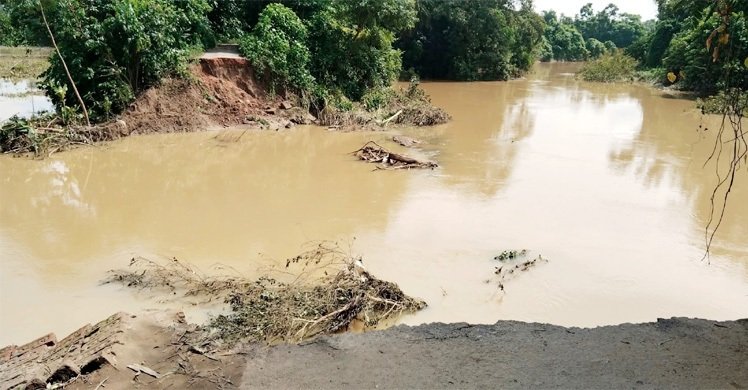
The dam, which stretches 122 kilometers along both banks of the Muhuri and Kahua rivers, was initially constructed at a cost of Tk 137 crore between 2004 and 2011 by the Water Development Board (PAUBO). For several years, the dam provided relief, and residents remained free from the destructive floods that had previously ravaged the region. However, in 2013, the dam broke at three points, setting the stage for what has become an annual battle with erosion and floodwaters. Since then, the dam has failed repeatedly, causing devastation each year.
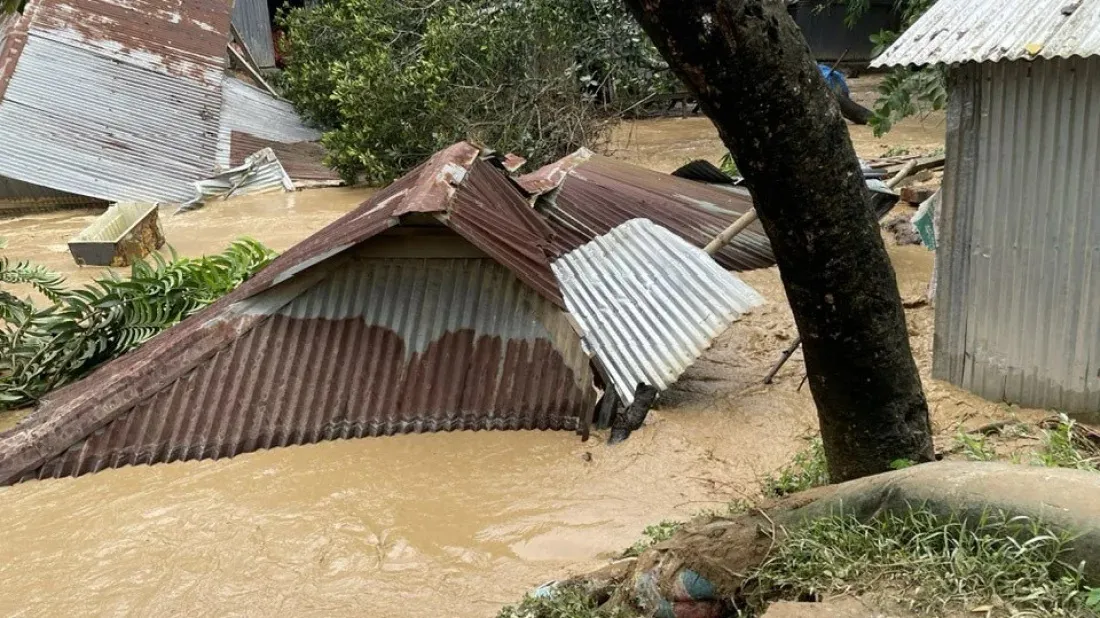
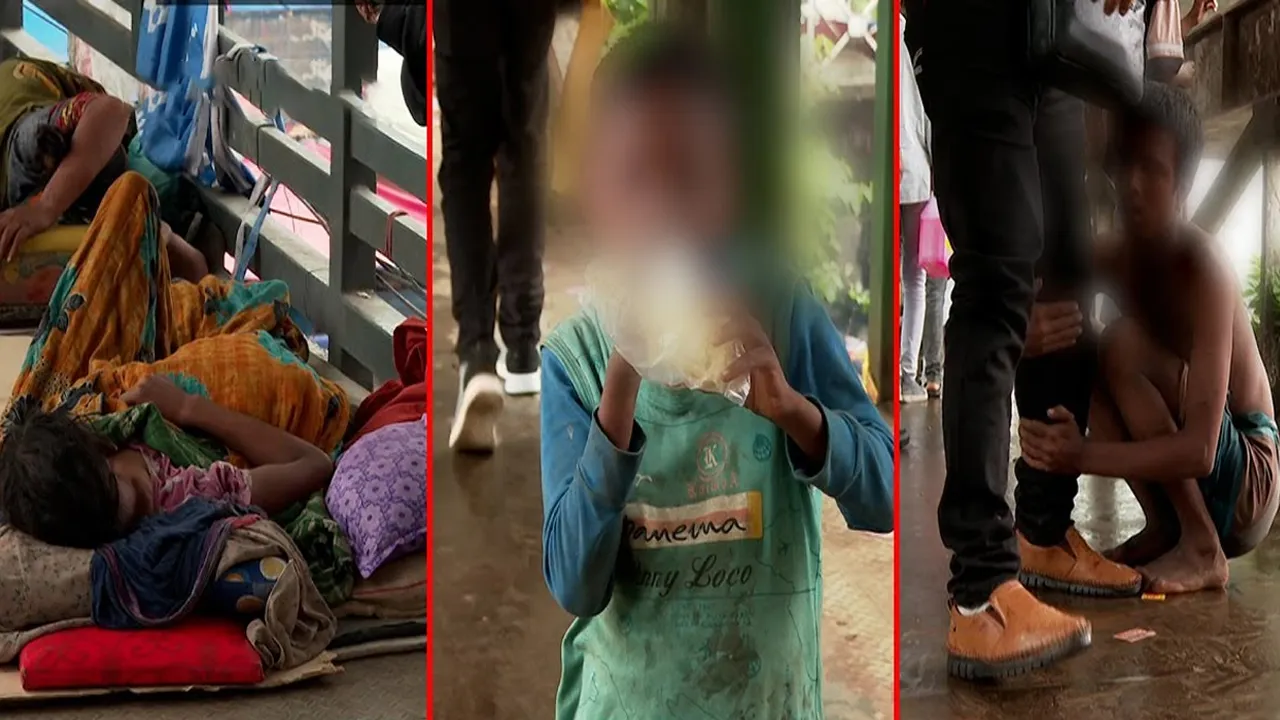
Residents of Feni's northern upazilas, including Fulgazi, Parashuram, Chhagalnaiya, and Sadar, have grown accustomed to the sight of floodwaters sweeping through their villages after the dam breaks. The most recent flooding occurred on the night of July 7, when the river's embankment collapsed, leading to a chain of events that submerged villages and left thousands trapped in water. As the water receded, it revealed the tragic aftermath: hundreds of families left stranded, their homes and livelihoods destroyed.
According to local sources, more than Tk 75 million has been spent annually since 2017 to repair the embankment. Despite these efforts, each repair is temporary, and the same sections of the dam continue to erode and break. The Water Development Board’s records show that from 2017 to 2023, millions of taka were allocated to repair erosion sites, but the dam's structural integrity remains fragile.
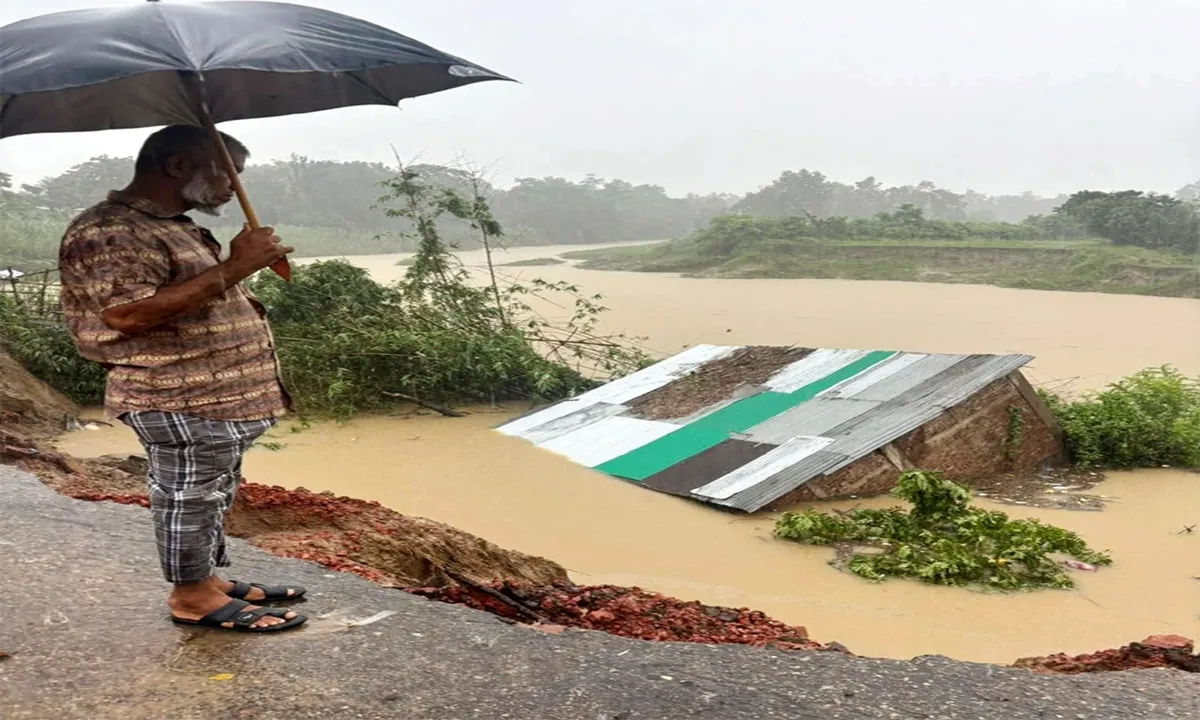
In 2017-18, Tk 39.12 lakh was spent on repairing seven erosions. The following year, this amount surged to Tk 169.2 lakh for 22 repairs. Additional sums were spent in the subsequent years, including Tk 133 lakh for nine erosion sites in 2023-24. However, despite these efforts, local residents report that the repairs are unsustainable, and the same places continue to break down.
Locals have also voiced concerns about corruption in the repair process, alleging that funds intended for lasting solutions are misused. Many claim that the Water Development Board’s officials are only active after the dam breaks and floods occur, failing to take preventative action or inspect the dam before the flood season.
Abdul Haque, a resident of the Muhuri River embankment, expressed frustration, stating, “I don’t remember ever having Water Development Board officials come to inspect the embankment. Only when the embankment breaks and floods occur do PAUBO officials come and complain.” Abu Yusuf, a resident of Parashuram, added, “Even though the dam is repaired every year, it is not sustainable. The same place keeps breaking, and the problem remains unresolved due to corruption.”
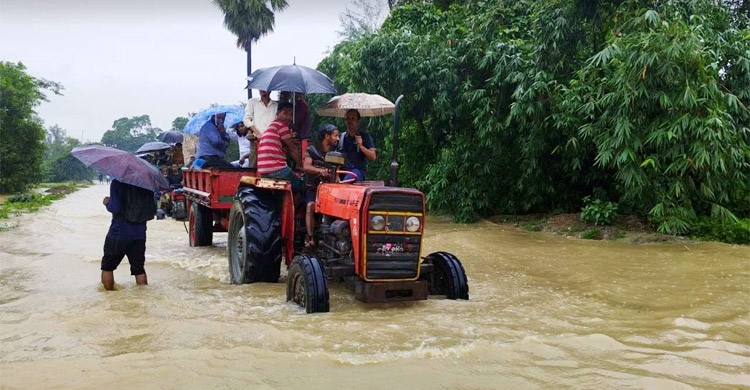
The locals have also criticized the lack of proactive measures by the authorities. They argue that officials should regularly inspect the dam to identify weak points and take preventive measures before the onset of floods. If these inspections were carried out properly, they believe the devastating effects of the floods could be minimized.
Feni’s Additional Deputy Commissioner, Ismail Hossain, confirmed that the district administration works closely with the Water Development Board to monitor the damage caused by floods. He stated, "The administration provides the media with information on how many parts of the dam have been damaged due to the floods caused by continuous rains, just as the Water Development Board provides it to the district administration."
Despite assurances from government officials, many remain skeptical. Feni's Executive Engineer at the Water Development Board, Akter Hossain Majumder, denied negligence, stating, "The actual picture of the erosion was not available due to the water. Earlier, we were only able to know the number of erosion sites. Since Friday, officials of the Water Development Board have been on-site and have given the final statistics of the erosion." However, the number of erosion sites has reportedly increased from 20 to 36 in just a few days.
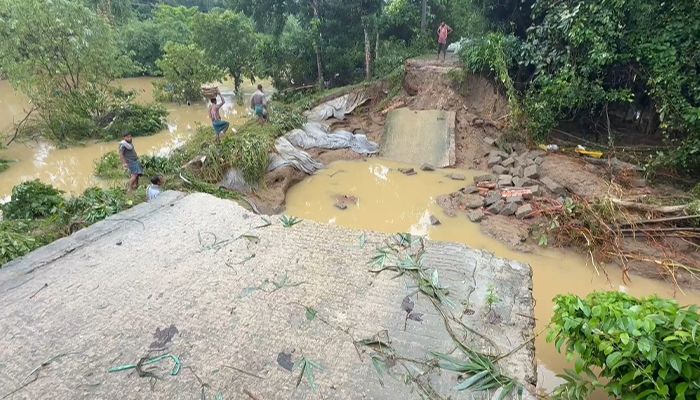
In light of the ongoing disaster, Farooq-e-Azam, the Advisor to the Ministry of Disaster Management and Relief, visited the affected area on Saturday. He acknowledged the severity of the situation and stated that the entire 122-kilometer flood control dam is at risk. The government is now considering implementing a new project worth Tk 7,340 crore, in collaboration with the army, to address the issue permanently.
As Feni braces for another flood season, residents remain hopeful that the government will take meaningful action to ensure that the dam is repaired in a way that will provide lasting protection from the rivers' encroachment. However, until a permanent solution is implemented, it seems that the cycle of repairs and devastation will continue, leaving thousands of families at the mercy of the rising floodwaters.