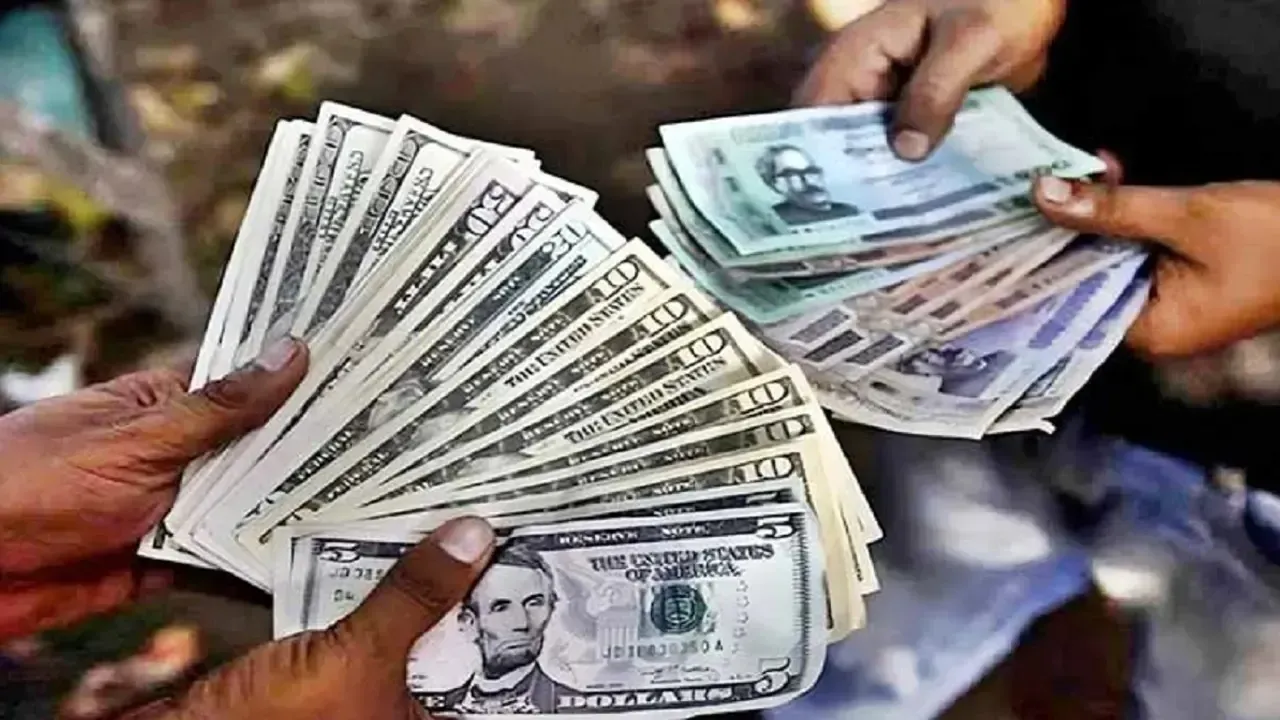


Time Digital News: Remittance inflow dropped by 7.37 per cent to $1.52 billion in October, the fourth month of the current financial year 2022-2023, from $1.64 billion in the same month of the past financial year.
The inflow of remittance in October was the lowest after February 2022 when it was at $1.49 billion.
The country’s private commercial banks saw a decline in remittance collection as 41 private commercial banks received $1,186 million in October while they received $1,262.95 million in September amid a dollar crisis.
The remittance inflow in October is 0.92 per cent lower than the inflow in September as the expatriates sent home $1.53 billion remittance through the banking channel in September.
In July-October of FY23, the expatriates sent $7.2 billion while they sent $7.04 billion in the same period of FY22, according to the Bangladesh Bank data released on Tuesday.
Businesses are grappling with the dollar crisis and they are failing to settle letter of credit payments due to the shortage of the greenback, BB officials said.
The trade deficit widened by $270 million to $4.55 billion in the July-August period of FY23 compared with that in the same period in the past financial year.
Remittance and export earnings are the main instruments for the bankers to meet the demand for dollars, but both are falling, the BB officials said.
The country has been suffering from energy, gas and power crisis in recent months as it is struggling to make import payments due to the depleting reserves.
The foreign exchange reserve fell to around $35.79 billion on Tuesday from $48 billion in the previous year.
Manufacturers feared that the country’s export earnings would drop significantly due to the gas crisis.
They said that the crisis multiplied their sufferings amid high prices of essentials and frequent power cuts.
The government and the Bangladesh Bank have also taken various measures to prevent inflow of remittance through informal channels, but the efforts are yet to be successful on a large scale, the BB officials said.
The inflow of remittance declined despite the fact that the government increased cash incentive for remittance.
On January 1, the government increased cash incentive on remittance to 2.5 per cent from 2 per cent to encourage migrants to send more money through the formal channel.
Considering the dollar shortage on the market, the Bangladesh Bank has recently issued a circular saying that the expatriates do not require to show documents for sending any amount of money to the country.
The central bank on September 14 approved floating rate of dollar that raised the ceiling for collecting remittance to Tk 108.
The interbank exchange rate of the US dollar is ranging at Tk 103-5.
Bankers said that the benefits of the raising dollar rate could be seen in the coming months.
In FY22, the inflow dropped to $21.03 billion from $24.78 billion in the previous financial year 2020-2021 that created a panic on the financial market.
In October, six state-owned bank received $307.22 million inward remittance, two specialised banks received $25.03 million, and 41 private commercial banks received $1,186 million while nine foreign commercial banks received $7.12 million, according to the BB data.
Of the banks, Islami Bank Bangladesh received the highest, $358.47 million, followed by Agrani Bank $106.41 million, Sonali Bank $89.44 million, Dutch-Bangla Bank $86.56 million and Al-Arafah Islami Bank $84.85 million.
In FY19 and FY20, the inflow of remittance was $16.42 billion and $18.21 billion respectively.
SK